[00:00]
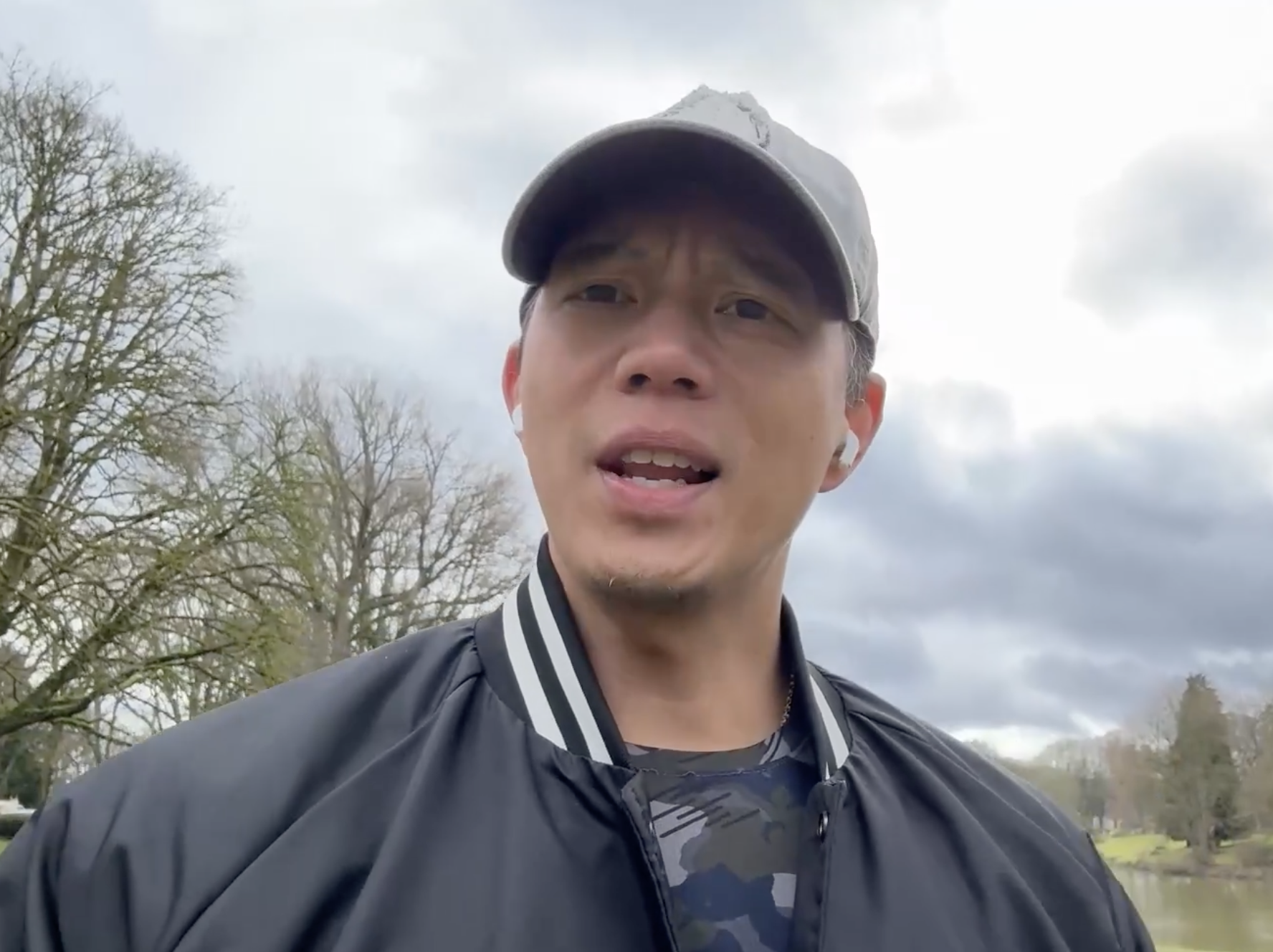
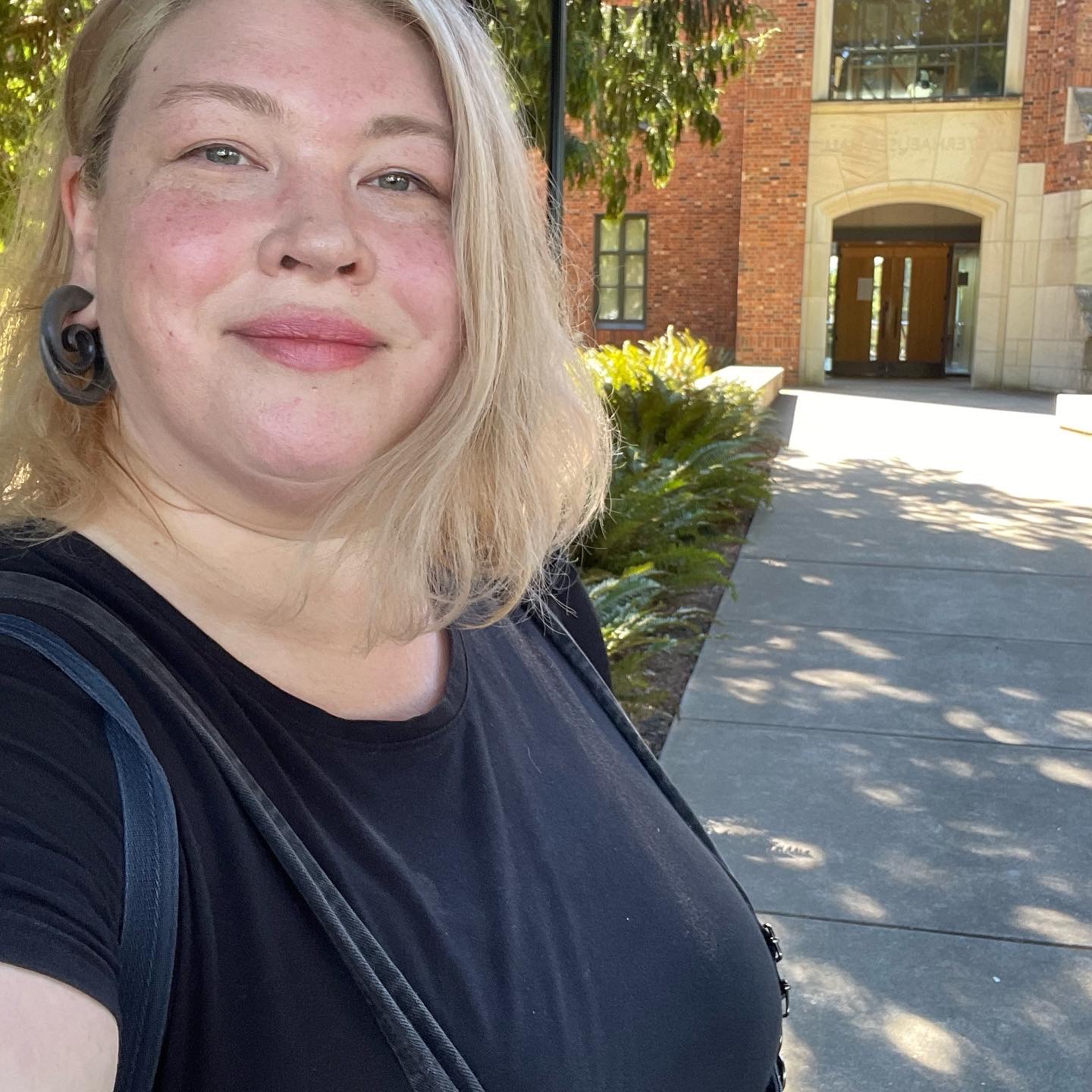
Welcome to Life Between Titles. I'm your host, Savan. Today's episode is about transformation, the kind where everything begins uncertain but ends with purpose. My guest, Sarah Johnson, has lived that transformation. She went from a creative career in design and technology to earning a doctorate in occupational therapy, Along the way, she faced imposter syndrome, burnout, and the fear of starting over Yet she discovered clarity through reflection and the courage to push through discomfort. This episode is for anyone that's standing at that crossroads, wondering if it's too late. Sarah's story proves that purpose doesn't disappear when one chapter ends. It simply takes new shape. Let's get it.
Sarah, how are you?
I'm doing well, thanks for having me on. How are you doing?
I appreciate you coming on. appreciate you coming on. It's good to see you and hear from you again. It's been quite a few years.
Yeah, I think over a decade. How Yeah.
Yeah. has happened ⁓ in 10 years. Sarah, you've got this amazing inspirational journey that we'll definitely dive into in the segment. But before we get started, I'd like to maybe give the audience a little bit more color as to who you are. So I'm hoping that you can answer a few one word answer questions for me. You ready for this? Alright, if you had to pick any word in the English language to describe you, what would you choose?
game. effervescent.
Ooh, why is I when I think of effervescent I think of like a nice calming drink for my upset stomach, but why did you choose that word?
bubbly, a little spicy, know, tingly, interesting.
Yeah.
all around enjoyable. I don't know.
I love it. I love it. All right second one if you had to choose a number to represent you any number, what would it be?
42.
⁓ okay.
very try, you know, the meaning of life, the universe and everything. Hitchhiker's guide for the nerds. For the nerds. Yeah.
That's deep. Yeah. That's deep. That's deep. I love it. I love it. All right. Last question before we dive in. If you could choose any animal to describe you, what would that animal be?
It's good. That's a hard one. You have a stamp on that.
No wrong answers.
I was thinking like quokka.
I don't even know what that is. What is that?
They're those cute little animals that people take selfies with because they just like they look like they're smiling all the time. Apparently they're really nice and have absolutely no sense of fear for humans.
Right, right. Yeah, usually those cute animals that like really look good on Instagram, they're also nocturnal. And so, you know, they're like sleeping all day and then all of a sudden they're just wide awake at night. Sort of like, sort of like my cats. Yeah.
Mm. and people are just bothering them.
All right, well, let's let's dive in to maybe a little bit of your background, Sarah, before we get into some of the professional stuff. Tell me about where you were born and where you grew up.
I was born and raised in Butte, Montana. ⁓ A lot of people will say, I've driven through there when I say that. ⁓ Yeah, it's a really rich history of mining there. It was a mining town for a long time and then a center of labor organizing and was at one point one of the biggest cities west of the Mississippi, the first to have electricity.
Mm-hmm. I've driven through there.
And then kind of everything busted and it was a bit of a ghost town when I was growing up. So it's just a really interesting place. A lot of immigrant populations. My mother's side of the family had a homestead there. So they had been there for, I think, four generations. And they came by way of Canada.
How did your family get there?
first and it was Montana territory I think at the time it was an estate when they got there. My dad's side the family, my grandpa took a job at a mine in a nearby town. He was a mining engineer, mining geologist and they actually came by way of the Amazon jungle to Montana. So yeah, if you can imagine that adventure, talk about, you know.
Okay. Wow. Whoa. Holy smokes.
interesting changes in life. That's a big adjustment. So yeah, so that's how they all got to be in Montana.
Yeah. That might be another whole podcast segment of what that journey looked like.
I have books full of letters and stories that we had them write down when they were older, just because there were too many just amazing experiences that they had going to different places, different mines, different mineral rich places. So that took them to a lot of, a lot of far flung locations.
Yeah, I bet. I bet. know, I'm in this process too of writing a memoir of my own family story. you know, when I was younger, I never had a desire to document this stuff. But as, you know, I've gotten older, one, the more stuff I've forgotten. But I also just think that documenting in some sort of narrative is respectful of sort of where you've come from.
Yeah. Yeah.
and the journeys that you've had like as a family and more times than not you know we look at people and we think that they're very one-dimensional but you know all this stuff has really shaped us to who you are and clearly like your family's had this rich history as well ⁓ it'd be great to see sort of like how and maybe we can get into that later on in this segment how that's inspired you to sort of navigate through the next maybe 20-30 years of your life
Yeah.
What?
Yeah, that's such an interesting thing you mentioned about wanting to know when you're older. I think your relationship to your parents really changes as you get older. When you're little, just sort of this, you know, all knowing, all authoritative being in your life. And you see them as just that. And they were a whole person before you got here. And with a whole set of circumstances, they may or may not have shared with you, you know. Yeah.
Right? Right? What was it like growing up in Montana?
Um, gosh, I don't know where to start. I it's such a beautiful place. And there were so many like wonderful outdoorsy things to do. Like I got to learn how to ski when I was little. It was very accessible. wasn't like a rich person thing to do. It was just a thing you went and did. Lots of outdoors. It also was a difficult place to grow up as a sort of smart, weird
Right? Right?
fat girl who liked arts and culture and there wasn't a lot of opportunity for that there. And so it was pretty itching to get out early on. And I don't want anybody to take that as a, a diss to Butte because it's a really cool place. Go visit. It's cool. But yeah, it just kind of wasn't for me. So it was just kind of, kind of plugging along there thinking about my escape for the most part.
Yeah. How did that desire to leave Montana manifest itself? Did you take deliberate actions in high school and for college or after that to say like, okay, I got to get out of here because this place is not reflective of who I am or my personality. like, what did that look like?
Yeah, so well, you know, I was lucky enough that I, my parents had tried to take me to cities and take me to travel. I also have, you know, lot of family that lives in other places. I have a very multicultural family. And so I got a lot of exposure to different ideas and what it, what it looks like to actually live in a place like that. We also took trips to I went to the West Coast a couple times. And then I went, I was really involved in the art club in high school. And I loved creative things and wasn't a great student. Which is going to be really funny later on when you hear the rest of the story. ⁓ I was terrible student. ⁓ I never did my homework. I tested well. So I went to art club after school a lot. And that's kind of where I found my community. And we went on a big
You Right.
thing called Art Trek, where we, ⁓ we got to go in a school bus. We, we went to Seattle. We went to Vancouver, BC. We did a huge art tour of all those places. I really fell in love with Seattle and kind of, I knew I wanted to go to college because I kind of felt like I had to, in a sense. I think a lot of, there's a lot of pressure for kids to figure out what they want to do and go to college. I don't feel like my parents necessarily were very
Uh-huh. Wow. Mm-hmm.
pressuring on get into a good school, to a good, you know, they're like, figure out what you want to do, right? And get it. Education was very valued in my family. And so was like, well, I have to go to college. They had this in my head. So, but I wasn't a good student. So I wasn't, I wasn't gunning for a law degree or anything like that. Right. So, so I thought, well, you know, I'm, I'm decently creative. I love arts, graphic design came up. I ended up.
Right? Right.
coming out to Seattle to get a design degree.
[10:03]
were there things that you saw in your everyday life that inspired you to be a graphic artist and get that degree? Because it is quite an investment, right? Like you're talking about thousands of dollars in the next couple years of your life. so I'm interested in knowing what types of things inspired you and what drove that commitment for at least that part of your life.
Yeah. Yeah, I think, you know, what I was looking for was a way to use my creative skills that I could earn a living with. And it was a sort of a sort of a practical choice, maybe a little ill advised given hindsight, right? Being 20 and 20. You know, I was just I was trying to figure out what to do. I really didn't know. I didn't have a lot of direction. I didn't know what I wanted to do.
Right.
I sat down and was like, these are some skills that I have somewhere where I think I could do it. And where, you know, I got an associate's degree. I didn't even go for a four year school because I really was sort of that unsure. And it was like, I just have to get out of this place. I have to figure it out. I did go to a year of college locally in Butte before I left to get.
Yeah. Yep. Okay.
you know, to take some of the sting off of the cost ⁓ with a local tuition. But yeah, I mean, was kind of this, I got it. I got to do something kind of a move. Yeah. Yeah.
Right. Yeah. Yeah. Do you, looking back on it, I know that maybe this is forwarding a little too far ahead right now, but looking back at it, do you regret that time and that commitment to going to art school now, now that you've sort of shifted gears away from that field?
No, I mean... set me up for where I am now, right? And it got me to Seattle. It got me to my friend groups. It got me to a lot of really interesting experiences. And...
Mm-hmm. Mm-hmm.
did keep me reasonably employed. you know, in that sense, it served its purpose. I think it was too expensive. And, you know, I think I have $5,000 in loans left on that still. So, you know.
Right. Yeah. Yep. I always wanted to go to an art school but I ended up going to a traditional university. What was it like for the audience that has never seen an art school? What can you expect from going there?
⁓ my gosh. was, well, it was the Art Institute of Seattle, which is not known for being fantastic. We'll see that.
really? I thought it was a great school, like as an outsider looking in.
Yeah, I thought so too. I think it was a little bit. It was it was interesting. I think it drew a very interesting group of people to it. And that was one of the things that was the most fun about going to art school is I was surrounded by creative people. That was also really intimidating, right? So you come from a small town where you seem like you're pretty creative. And then you get there and you immediately realize that you're actually terrible. And you're not anywhere near as talented as the people who are in school with you. And that's pretty intimidating. And I actually had a hard time with that. But yeah, it was interesting. mean, you go through classical drawing classes where you have a nude model and you sit and draw the same person in the same pose for four hours. Classes were four hours long.
Yeah. Yeah.
and you know principles of design and some business and law copyright law kind of stuff. You really need to understand that if you're going to freelance work. And then portfolio and process like proving that you have the skills to do each type of design typography logos layouts. Plus like computer classes like layout programs stuff like Photoshop and InDesign. like that.
One of the things that I've been talking about recently with people is this idea of imposter syndrome and how we can easily fall into that trap. I mean, I know that even up until my latest role, I've had that imposter syndrome. Did you feel any of that when you were going to college? You mentioned that you had...
Mm-hmm.
colleagues and classmates that were exceptionally better, however we categorize that in art, at some of these things. And if you did feel that, how did you sort of get over the imposter syndrome?
100 % had imposter syndrome. I think partially because I was so lukewarm about my direction at the time. It wasn't necessarily a calling of any kind, it was just a functional thing. And then I started doubting whether I would actually be able to do that. ⁓ And...
Yeah. Yeah. Yep.
I would say I still had imposter syndrome well after college. And that's partially that lack of direction, but partially just the circumstances around my graduation. It was right after one of the big tech bubbles happened and Seattle was heavily affected, which meant a lot of those design jobs went away. And then I graduated right around 9-11. The atmosphere and the The ability to get those entry level jobs was really hard. I remember applying for so many jobs and getting one interview over, you know, months and months. And I ended up actually going and working other jobs for a long time and trying to freelance, trying to build some kind of a business, kind of really, you know, being in my early 20s, not knowing what I was doing, not knowing how to run a business, not knowing, you know, not having the, social and business skills to really communicate very well with people. yeah, so I definitely had imposter syndrome and it didn't help me get better at what I was doing. I think, you know, sometime in my mid-20s I was introduced to the fact that I'm a perfectionist.
Okay, okay.
And how destructive that actually is, because there's a concept in psychology of mindset. A lot of people who do self-improvement will talk about it. It's Carol Dweck is the professor and psychologist who has researched this forever. And it's basically looking into what are the things that make people able to get mastery, able to excel, able to get better at things. It comes down to what she calls a fixed mindset versus a growth mindset. And essentially, a fixed mindset is when you think, I'm just not good at that, if you're not good at it on the first try. It's a real trap for people who are smart or who tend to catch on to things pretty quickly. And it tends to hit them a little bit at a higher level, like college.
Right. Mm-hmm. Mm-hmm.
where suddenly things aren't as easy as they were before. And you really have to apply some skills. And if you didn't have to try hard before, you never built the skills to be able to tackle a greater challenge. And so a growth mindset is essentially, I'm not good at this yet. I need to work harder. I need to put in more practice and then I'll get better because getting better at something and being good at something.
Yep. Yep.
is about the time and effort that I put into it, not about a natural state of being that I have. And that was really powerful for me to kind of look into that and realize that and go, ⁓ I see that myself. And not everybody's a whole fixed mindset. Not everybody's a whole growth mindset. We tend to have different areas of our life where we feel differently about those things. And there areas where we do give ourselves grace and say, I just need to practice more to get better at that. Working out is a great example. Like you don't expect to go be a champion powerlifter the first time that you, you know, do a deadlift. You think, I'd have to build up my weight slowly over time and then I'll be good at this. And so that's, you know, somewhere where people have an easy time having a growth mindset. But when it comes to things that are related to work or identity, if it's really close to your identity and you're not good at it right away, it can feel, I think, very threatening.
Right. Right.
and that can lead into imposter syndrome.
Yeah, I find that super fascinating. I was listening to the diary of a CEO podcast and he had on. somebody super smart, can't remember his name, some scientist. And they were talking about the 10,000 hour rule and the mastery of that and the challenges of having a mindset like that and the... Restrictions that it causes people because you're so focused on one thing over and over and over again, especially when they're young they don't sort of broaden you know, their commitment to potentially other things and it's weird like to listen to all these Social science podcasts because you don't really know what the hell to believe you right? You're like one guy's telling me I got to put in 10,000 hours to be really good at this another guy's telling me well, no, you shouldn't put it in 10,000 hours because you might be then ignoring some of these other things you need to do from from your perspective as you were growing up how did you approach trying to master crafts like graphic design or building a business because those are all skill sets that you know take a long time and a lot of commitment
Yeah, I I'd say I failed pretty miserably at it, to be quite honest with you. ⁓ I think that was the problem, right? I was this perfectionist and I thought that I had to be the best at something where I wasn't good at all. ⁓ When in fact, there are all kinds of places in the middle as you're coming up and learning things to do what works and to do what's good enough. ⁓
Right, right? Right. Right?
You don't have to be winning a design award every time you make something for a small business. They just need it to get their customers in the door. Right. They just need the, you know, the logo for whatever. It's you're not doing a Nike brand deal every day. You work your way up to that level. Right. That's a high level. And I really looking back, I wish I would have understood that, but I kind of had to come through it to know it. And that's just kind of my my journey on that.
[20:05]
Right. Right. Right. Yeah, I agree. I agree. agree. Sarah, you mentioned that you did some freelancing during this period of time. What other things did you get yourself into? ⁓ Right?
Oh my gosh, it was all over the place. I, what did I do? I did conferences for Microsoft. I like cleaned up their PowerPoint presentations for conferences so that they were on brand. Which was fun because at 21 I got to, you know, go to New Orleans and LA and travel around. That was cool. I worked at a little frame gallery.
wow, okay. Uh-huh. Yeah.
I was a case manager for a forensic psychologist for a time for several years, which was sort of like paralegal and writing report writing work because I was a good writer. And I was an assistant for an architect for some time. I helped pull permits from the city and get drawings where they needed to go and did her billing and her bookkeeping for her. And then sort of economic downturn happened in 2008, which took away the architect job because the building stopped. And she couldn't keep me on. then, well, I had to fire myself because I was the one doing the books. So I had to the talk, say, you know what, you can't afford me right now, so it's time. ⁓ You know, she was so nice to me. And then.
You Right.
Around about that time, someone who I was in a dance troupe also, I was running a fire dancing troupe all of this time as well. I was really all over the place. you know, multi-talented generalist, I guess. And I, one of my...
Yeah. Yeah.
One of the people in my troop was working at this startup that was just getting crazy busy and they needed a photo retoucher. And so, you know, my, my background was designed, but I know Photoshop. I, she got me up to speed on what it, what I needed to know for that particular job. I went in and interviewed and then that startup ended up going gangbusters. It was kind of a unicorn startup. And, that was a great opportunity. That's how I actually. got my first really full-time design role because I worked in that photo retouching department for a while, ended up managing a team there, and then I moved into marketing design. I was there for seven and a half years. So that was kind of, that was where I had like a real career happen, you know? So yeah, that was a really good opportunity at the right time. And there I didn't really feel the imposter syndrome because my skills were needed and because it was a startup I ended up seeing all these opportunities to contribute and improve processes and establish processes. I got to teach people, I love teaching people things, I used to teach dance stuff and kind of figured out why I like doing all these other things I think a little better than I like doing the design part of it.
Right? Yeah, I definitely want to dig into the startup life. But before we do that. There's such a wide breadth of things that, that you took on at this early stage in your professional life. What do you think was maybe the common denominator across all those things? Cause you look at it at a surface and you're like, how do any of these things actually match up? Right? Like you have the bookkeeping, the fire troop, the freelance design stuff. And, but for you, it just made sense in your head. what was that common denominator?
That's a great question. Part of it was just seeing an opportunity to do something and try something out. think a lot of me was kind of searching for purpose, which is really on brand for the conversation today. I think it comes back to, I still was not sure about design. I felt like I had made the wrong choice. Opportunities came to try different things.
Yep.
in some way leveraged my ability to pick things up really quickly. My interest in trying new things, learning new things, I love to gather knowledge ⁓ and to a certain extent creativity as well. I think all of them had a pretty heavy cognitive critical thinking component to them.
Mm-hmm. Yeah.
and that's always attractive to me. If I do the same thing all the time, I do get a bit bored. ⁓ yeah, so just kind of...
Right. Right.
really trying to find my way, honestly, and kind of just not sure about what I was doing or where I was going and feeling honestly a bit behind in life, you know? Yeah.
Yeah. I don't know if you'll ever feel ahead in life. You know, when I was growing up during that time, I always constantly thought that I had to hit these milestones as well. And if I didn't hit them, I was like...
Yeah, I don't know that's possible.
behind my colleagues or I mean, especially, you know, growing up in an Asian, Cambodian community, you have that pressure to, you know, succeed or do whatever it was that was sort of the immigrant story of success. And if you didn't hit those things, it was like frowned upon in some ways. And so there is always that pressure of trying to figure out like how to get to that point.
Yeah.
very stressful because at that age you just don't know sometimes what you like and don't like.
Yeah, no, we expect high school kids to kind of know what they want to do for the rest of their life and their prefrontal cortex hasn't even gelled yet. It's not even formed, right? ⁓
Right. Yeah, I don't even think my prefrontal cortex is yelled yet and I'm 45. ⁓
Right. And some people do, right? Like maybe skipping forward a bit, but in my cohort for grad school, there was somebody who turned 21 during our time there. I was just impressed. You'd have to do a condensed bachelor's to get there at that point, running start. Some people are really locked in. They find out early on.
Yeah.
this is what I want to do. This is what my purpose is. And not just that's wonderful. Like I'm so happy for them. I hope they have long, wonderful careers doing that. But some of us have to come about it in a very wibbly wobbly, wobbly roundabout fashion. And then when it hits in, then it's good. And then you feel like you're on the right track. And then you know.
Right. Yep. Um, at, at your time at this fast growing startup, and for people that don't know, there was a period in Seattle history, I would say between like 2000 to maybe the 2008 where we had the, the whole recession and all that stuff that tech startups were highly romanticized, at least in my opinion, you people, you, you read about these companies that are going big and people just getting rich and being super successful. and you spent seven and half years at one, what do you think were some of the things that kept you there, that motivated you to get up and go to work and commit almost a decade of your life there?
Right? Yeah. Well, I think in the early, so it truly after I would say about five years, it was no longer a startup culture. I think they tried to hold on to that, but it's really hard once something grows to a certain size, it becomes an established business with all the benefits and detriments of that. Right. But in the early days of the startup, You know, I'd spend hour days there and it was constantly challenging. There are kind of no rules. It's a bit Wild West when it's new, right? We all show up, we have a problem and we all work together to tackle that problem. There's a lot of sort of blurred lines between what's one person's responsibility and what's another person's responsibility. And there's a real...
Yeah.
ability to have agency in that environment, to take the lead on something and to really say, you know what, this isn't working, I'm going to fix it. And I love that. I love that. Yeah, that was really attractive to me. I think that's one of the things that motivated me to those crazy hours early on. Plus, you know, I had incentive stock options. I
Yep. Mm-hmm. Yeah, I do too. I do too. Right.
I didn't have a ton as a designer like somebody in engineering or in the, know, C-suite person would have, but it was a nice incentive. ⁓ You know, and it did pay me some money. It did afford me some space when I was ready to career change.
Yeah.
Beyond that, it was growing so fast that I was always teaching somebody the ropes, training new hires. I got to move up. There's opportunities for advancement if you're doing well. Come around a little more frequently when you're employee number 60 and now there's 2,000 people. All of a sudden, and you're looking around going, what happened? How are all these people here? Who are all these people?
Yep. Right.
You know, and so that's pretty fun. then obviously after a few years of doing one job, I got to switch to another job. And then that role had lots of different things I could do within the role. You know, eventually we went public. It was a pretty wild public ride. just watching that stock price rise all day was pretty exciting.
[30:16]
Yeah, I bet. I bet. Yeah. Yeah.
I was having a good day that day. And then we did get bought out. And that then changed things a little bit. And it got bigger. It got a little less easy to move around. When I had wanted some other opportunities to, you know, was thinking about switching my career at that point. I was in design for a while. was saying, you know what? OK, I've done this.
Right.
I know what this is. I don't think I want to do this forever. It's coming up on feeling really too late to go back to school, which I don't. It's not. It's never too late. We can go back to school. But it was starting to feel a little like, OK, I got to make a decision. I started exploring some options. around that time, I think the stress really caught up to me. And I. I ended up having some health problems and chronic pain. And that whole process was just really difficult to deal with and also maintain that level of performance. it was such a struggle. And I really was like, this doesn't need to be, I got myself sorted out. I figured it out, right? That didn't need to be as hard as that was, right? And I really started thinking that I wanted to My job was to get people to click on ads and buy stuff. A necessary function, it's a necessary job in a business. It wasn't really fulfilling for me to do that. And I started thinking, I want to spend every day doing something that makes the world a better place somehow that helps people. I really started liking the idea of helping people who were going through similar issues who were mid-career and still wanting to work and still wanting to do things. there's a lot of supports for the elderly or for people who are fully disabled by something to where they can't. work anymore, but there are people who are kind of in the middle of they might be managing a chronic illness or have a temporary setback or, you just just going through something and really could use this like a more holistic support system and kind of shortcuts to like how do you manage this? How do you arrange your life around this? And and so that was kind of what was on my mind when we had a layoff and I suddenly found myself with an opportunity. It's never fun to get laid off. There's so many people going through layoffs in tech right now and I'm really feeling for all of them. I think it's a real, we tie our identities to work so much that it can be a really difficult process for people to through, when... especially in tech, they're used to being able to find a job really easily. And right now I'm watching people really struggle and apply a lot of places and, not get any movement. And that's kind of what happened to me. I, course, I was on unemployment. I, so I started applying for jobs right away and that, that kind of wasn't really going anywhere. It started feeling hearkening back to when I graduated and I couldn't find a job and I was like, Oh no. Here we go again, right? And that's kind when I found this program through unemployment that was a career transition service for people. It's really, it was meant for displaced workers, truly. But anybody on unemployment could take it. And it was a two month course at the local community college.
Yeah.
And that's kind of where I settled into Occupational Therapy as my choice.
Yeah, for people that don't know, what is Occupational Therapy?
Yes, Occupational Therapy occupational therapy. So a lot of people are confused about occupational therapy. It's such a broad scope of practice, but essentially at the heart, it's a rehabilitation profession. And so at the heart of it is the belief that in getting people back to doing the things they need to do, want to do, or expected to do, those are occupations. And so
Okay.
What that looks like in practice is people in a pediatric setting who are teaching kids handwriting because that's a child's occupation, teaching them play, children with autism, maybe like helping them with social skills, play skills, things like that, because that's a child's occupation. Basic activities of daily living, somebody who might have a limb difference or difficulty controlling their muscles. and can't take care of their daily hygiene practices because they need some adaptive strategies. And it can look like working in an inpatient rehab hospital with people who just had a stroke, who need to learn how to do everything over again with maybe one arm instead of the other one that's not working now. It looks... I think on the surface, can look a lot like PT to people because we do do the physical side of things. do the biomechanical, but we also encompass the psychological, the spiritual. It's like a whole person. We think about social systems. We think about supports. We think about ergonomics, adaptive strategies. So we take kind of all these pieces of what makes a person able to perform a function. And we work on whatever is needing support with that person.
Yeah, that sounds amazing. And like, I didn't even know that occupational therapy was that broad. And I want to definitely dive deeper into that. before we get there, a little bit about your time at the unemployment program. More times than not, you don't hear people saying, hey, like I'm in an unemployment program because there's a certain stigma, right? Like it's like, you don't have the skills to get another job. So you just don't talk about it. Like I know like I've, I've actually been in one of those programs where they were teaching skills that you, that may interest you in your next occupation. What was it like for you going through that program? And what did you get out of it
Yeah, well, so I had all these ideas in my head of what I wanted to do. I needed the time and space to think about them. This program afforded me two months of time, fully focused on what are you going to do next? And I had also, like, obviously had a layoff so that I had a severance. I had this like I had a partner who was game flamphoid. It was just like this, this moment to breathe and think. And it was, I'm not ashamed at all of taking it because I think what I did is see a fantastic opportunity at the right moment. And I went for it. And it was super interesting. A lot of the people in the class were either older in industries that were changing to where they wouldn't be able to find a job in their industry.
percent.
or they were homemakers who now had kids out of the house and needed to go get a job and needed to kind of figure out what they could do. Or there were several people who were ex-military and who were transitioning out of that sort of structure of the military into what am I going to do in public life or where am I going to use my GI bill, right? I'm just not sure yet. I did this exact specific function in the military and it's so ultra specific. What, how does that turn into something else? Right. and it was, the class was partially because it was really built for people transitioning. There was like a section that was just computer basic computer skills, which obviously I didn't need. ended up helping people. Most of that part of the class.
Hahaha
Which is fine. I was happy to. They were a wonderful group of folks. And the rest of it we spent really diving into what our skills and abilities are. And see, and then taking that knowledge and seeing where does it apply to another type of industry or another position. And So one of the things we did was a dependable strengths exercise, which I found super valuable. And I would encourage anybody to do this. Sometimes there's classes run near you. It's fun to do it in a group because you go and you write down stories. I'm trying to remember the process, but you basically write down stories from your life where you feel like.
Okay, what is that?
you were doing great or you did something amazing or you felt good doing it and you write it down as a little story. And then you go read those stories to people in the class. And everybody, as you're reading, they do kind of what we did at the beginning where you write down one word, but they listen to your story and they write down one word like determined or compassionate or how they would essentially code what you told them, your traits that you were telling them about.
Mm-hmm.
And then at the end, we all got this like, I still have this huge sheet of paper with all the words written on it that were us. And then it's very vulnerable, but it's also really wonderful to hear about what people see in you that you might not be able to see reading your own story. ⁓ I think that's the value of doing it with a group. You can definitely do it on your own. I'm sure there's probably a website out there with a quiz or something like that.
Yeah.
And so you take all that and then you start coding it and you start winnowing it down to your best qualities. And then you use that when you think about interviewing, when you think about doing a personal statement, when you think about elevator pitching to people, like who, that question of like, who are you? Right? And it helps you just get to the heart of that so that you
[40:18]
Right.
don't ever feel sort of caught off guard. You know who you are and you know what you're doing, right? I thought that was a really powerful process. The other thing that we did was we took a lot of those job board surveys that tell you, you say, I like this, or yes, I do this well, or I don't do that well. And it spits out a list of potential careers, right?
Mm-hmm.
And that's kind of, it's not gonna give you the right career, but it's gonna give you a place to start researching. And so then we would research the careers that were interesting to us, see what it actually takes to do that career, what kind of school is involved, what kind of time commitments, what are the job prospects, what are the job prospects in your area specifically? Is it a growing field or is it shrinking? Is it, you know, basically looking at, is this a good idea for me to go into this career? And, you know, I had thought possibly that I wanted to do counseling psychology. And I still feel like, gosh, I could do that if I wanted to, you know, like that's very attractive to me as well. But Occupational Therapy kept coming up and...
Right? Yeah.
The more I looked into it, the more I said, wow, you can kind of use some counseling skills in this. But you can also, you know, I had been a dancer. You can also help people feel better physically. You can also talk to people about their lifestyle and how to manage a chronic illness. You can also, you know, you can work in mental health. You can work in pediatrics. You can work in geriatrics. And then the other part of it was like, once you have the degree, you're not locked into one thing. Right? So for instance, I'm specializing in hand therapy now. That's one subspecialty of Occupational Therapy. And PT's can also be hand therapists as well. That's very biomechanical. It's very much on the physical side. Although you do get some diagnoses where you need the psychological side as well. And you need the nervous system and everything involved.
Mm-hmm. Mm-hmm.
But if down the road I say, you know what, I just really want to work with older population on fall prevention. I can go work with the older population on fall prevention. I'm still utilizing the same skill set, but I can have a new challenge and a different thing. I love hand therapy. I'm super gung ho about that. I loved that there was this profession that once you made that commitment, big commitment to schooling, huge, huge commitment. That there were so many options and it was growing and the pay is okay. But you know, that's not, that's not the, that's not the only thing, right? I want to go to work every day feeling like I helped somebody and I do feel like that.
Yeah. Yeah. Yeah. First, I absolutely love sort of like the reflective nature of... your time in the unemployment program. sounds like that period of your life gave you one, an opportunity to do the reflection because more times than not, we're just moving so fast that it's hard to just even sit down and think about things. But the other thing it sounds like it did was it gave you some perspective and or tools to make a change. And I find it absolutely incredible when people do things that takes a lot of bravery like, hey, I did this for 20 years of my life and now I'm gonna do something completely opposite of that. And it's very, very scary. What did you think was maybe some of the things that helped you make that transition during this period of your life? Was it some of the tools that you talked about with the strength chart or was it just a series of like different combinations of things.
think it's a combination of factors. Part of it was that I did kind of more understand that problem of perfectionism. I did understand that I really needed a field where I felt challenged every day. was so uncomfortable with the situation that I was in, even though was paying the bills, even though it was a perfectly respectable job, even though there's, and it's a job that's wonderful for so many people. And a lot of people will be like, that's a great job. What a fun job, right? And it just, wasn't for me. It wasn't for me. And I was really uncomfortable. And sometimes there's enough friction and enough discomfort.
Yep. Yep. Yep.
that that opportunity really does kick you in the butt and to just get you out there. Truly that moment to breathe was really important and the process of the sort of structured process of reflection that happened through that, which is incidentally a thing I love about Occupational Therapy is it is a reflective practice. Reflection is actually a part of our practice.
Right.
in order to improve ourselves as practitioners. the other part was like, at the end of that two months, I came out of there with a full plan. I knew where I could apply to school. I know what the process for applying there was. I knew what all the prerequisite classes were. I knew exactly what I needed to do step by step to make this happen. having a roadmap is just...
Great. Wow.
It's a powerful thing because you'll start to feel like you, things get tough along the way and you start to feel like, my God, what am I doing? Things get really uncomfortable. There are some dark nights of the soul along the way, you know? But you have a roadmap and a plan and you can gut check yourself and be like, I'm still on the right path. This is still what I want to do.
Yeah. Ha ha ha ha ha!
Yeah.
So you went back to school after the unemployment program or you were applying to get into a school after this period?
Yeah, I got on with a creative agency so that I could start temping and because again, the full I wasn't going to apply for a full time job going straight back to school. ⁓ So I ended up doing some temping, which was fantastic. Actually, I really enjoyed that. And. Applied for.
Right.
the University of Washington because I needed a bachelor's degree to get into grad school. So if you recall, I had an associate's degree in graphic design. So I had to finish up a bachelor's at UW.
Right. Yep.
Got into UW. majored in psychology, which is, know, Occupational Therapy is there's a tendency for the bachelor's to be exercise science, kinesiology, and psychology, because those are all really good basis for that degree. Any bachelor's degree can get you into Occupational Therapy school. Truly any. There are people with, you know, bio degree.
Okay. Okay. Will my communications degree get me in there?
It will if you take the medical prereqs. You'd have to go take all of the medical prerequisites, but yes, yes, absolutely. Yeah, it's truly, because it's holistic, it's a profession that values people with diverse backgrounds and experiences. I think that's a strength of it. you know.
Okay. Okay. Okay.
And still, even though we value that, there's a problem with diversity in Occupational Therapy. It's primarily women and primarily white women. So I would love to see some new faces. How can I support you?
Yeah, so you went from tech, which also skews one direction to now the other side of it. Okay, I understand.
Yeah. Yeah. Yeah. But I mean, there's a great need for cultural competency. ⁓ When you're doing rehab, you work with everybody, every culture, every language.
Yeah. Right? Everybody's got problems. Everybody's got problems.
They do and they have different ideas of what rehab looks to them. And Occupational Therapy like the great thing about Occupational Therapy is that we really try to get at the heart of what matters to you before we make a treatment plan. That's truly like, what are we doing if it doesn't matter to you, right? Like, you know, there are people who come from a culture where their family is gonna do a lot of the caretaking tasks for the elders, right?
Yeah. Yeah, for sure. Yep, absolutely.
So if I'm working on how to do your hair for you, like if you can't comb your hair, it's like you don't care about that. Your grandkid is gonna do that for you. But you care about playing with your grandkids. And that can be what we focus on in therapy. It can get a little tricky because in the hospital, we have to meet goals related to basic activities of daily living. That's about insurance.
Yeah. Yep. Yep, absolutely. Interesting. Okay.
and reimbursement. But the great thing about OTs is we understand that the same functions that allow you to brush your hair are the same functions that allow you to do the thing that you want to do. And so our work gets you to both places. But we're working with you on what you care about because that is what's important.
Yeah, that's pretty amazing. I've always wondered... people in that field and in that profession, how they end up there and why they chose that because one, I think generally speaking, you have to have a pretty deep sense of compassion to be able to like absorb all these problems that people have and then help them get better. But I also think, you know, people in that field, you have to be able to communicate at such like varied levels because you have people with such different diversities. In your undergrad at UW, did you already know you were going to get into occupational therapy and were there classes specifically that you took to help you be set up for success there?
[50:24]
Absolutely. ⁓ Yeah, so I had that great roadmap out of the out of the unemployment program that I went to. And the goal was Occupational Therapy school. Choosing the psych bachelors was a bit of a insurance policy. ⁓
Yep. Which by the way is very, very hard to get. Like I took a psych class when I was there and I was like, man, this is a little too rough for me. Yeah.
It's so much reading. Anybody who's in like a computer science, engineering, like they get in this like class and they're like, my God, there's so much reading. I can read a research article so fast. I built some muscles in that department. But yeah, so it was an insurance policy because I still was like, my fallback was still
Yeah. wow, yeah not me. That's tough.
counseling. So the psych undergrad would then be good for applying to grad school to be a counselor, right? It kind of worked for both ideas. so for psychology there, I took a lot of classes that I thought would help with rehab, like cognition, memory, so really neuroscience adjacent classes.
Okay. Okay. Mm-hmm.
There's obviously a group of classes I had to take for the major, the base psychology classes, but then I also took a class on mindfulness because I know that mindfulness is a really great tool for pain management and that's something I would like to help people with. And I also took, I had to take a lot of my prerequisites at the community college, unfortunately.
Yep. Great. Okay.
or med school because not med school for Occupational Therapy school, but their medical prerequisites to be very clear. Just because I was going to the UW Tacoma campus and they don't have the medical school there. So they didn't have like anatomy and physiology and like the lower level bio and chem classes that I needed on the schedule that I needed. So, and I had to start over in math because I had an art degree. So I had to start in basic, basic math.
Right. Right.
at the community college, sort of concurrently. So I'd be taking one class at the community college and a full load at the, yeah, a full load at the school and then classes over the summer at the community college to try to make that date to start grad school. But then I ended up doing two things while I was there. I actually extended my time at school a little bit because I minored
Ugh, that's rough.
in research, social science research methods. ⁓ Again, to make myself attractive to grad school and to understand research. I have to read and consume a lot of research to do an evidence-based practice. And so was important to me to really understand that. That required some higher level statistics courses, which was a little bit of a song and dance with the math classes at the community college and trying to make that all work out. And then...
Okay.
I wanted to do a research project, but there wasn't really anything set up in the psych department for me to do that. I also, because of my GPA, I was a straight A student, yay. Suddenly I'm a good student, right? I said I was a bad student earlier. Suddenly I'm graduating with double honors, right? So ⁓ yeah, how does that happen? It happens with direction and purpose. That's how it happens. ⁓ So I...
Yay! Yeah! Yeah, that's amazing. Right?
I got invited to the global honors department, which is a global engagement minor. It's like a policy minor. It looks at economics, world events, market forces, that kind of thing, game theory, tragedy of the commons, all that kind of stuff, media communication, stuff like that. And... really tries to get you to think about the global and the local as interrelational things, right? And part of that was it gave me access to a fellowship, which was funding to do research. So that's how, so I got the, it's called the Bamford Fellowship in Global Engagements. I believe that's the whole title off the top of my head and ⁓
⁓ okay. Uh-huh.
So they gave us a little bit of funding to do a research project. So I partnered with one of the psychology professors and another student. She and I got advised by that person and we had sort of similar themed projects but completely separate projects from each other. We actually got to run a study, do the statistical analysis, come up with results and publish a thesis. amazing experience and I think I was honestly over prepared for grad school because of it which was I felt over prepared. We got to the sort of stats and research classes and I was like yeah okay good got it let's go. So I was really happy that I did all of that because it I think it really set me up for success.
Yeah, that's amazing. Just the amount of different things that you've accomplished since finishing that unemployment program. And I know this probably spans years of your life and we're condensing it to a few minutes. But during this time, what do you think you learned about yourself that you didn't know when you were starting that journey?
Yeah. I think there was a lack of perseverance when I was younger. this theme of that growth and fixed mindset and perfectionism keeps coming up, but I think that was the real problem for me.
Mm-hmm.
The perfectionism didn't go away because I wanted those straight A's, right? But I didn't, I was less likely to quit when things got hard.
Right. Right.
And I really sort of built that muscle a little bit at a time and things kept getting harder and harder. But I was more able to rise to meet that challenge. I think the purpose and plan were a huge part of that. there was also just a bit of surrender, like, I'm in the middle of it now. I'm not stopping. I'm not putting my whole life on hold. I have grown up bills. It's very hard to live on student loans when you have a mortgage.
Yeah. for sure.
It's not that I've been in poverty since 2018. Like truly, it's been very uncomfortable. I'm not going to sugarcoat that. It's been hard and. I just, not gonna, I see this as my time to do this and that's the purpose of this time. And that's what I'm fully dedicated to. Like I really am dedicated and it's born out in the success, right? I would not have described myself as like someone with grit or perseverance or...
Yeah. Absolutely.
successful before this. And I truly feel like I'm successful right now. it is, it feels really good. I, people keep saying doctor when I, my friends when I arrive and I haven't seen them for a while and they haven't seen me since graduation, they're like, doctor. And I still haven't gotten used to it. It's still like, I know I just, I'm like, oh.
Yeah, that's amazing. Yeah. Hahaha You're like, who, where?
I blush and I'm just like, my God, but then I just feel so good about it. Like I did that.
Yeah, you've literally like taken something from nothing and you've created that reality, which is absolutely amazing to me.
Yeah. Yeah.
and you know the idea of perseverance especially if you are a little bit older in life and you have Adult shit like bills, health issues, older parents, kids, a mortgage, whatever they may be, is exceptionally it becomes exceptionally harder to have that and not lean into the things that you're comfortable with. What what do you think?
Yeah.
helped contribute to that grit and to that perseverance for you? Were there things you did in life that helped build some of that stuff up? Were there things that maybe you've cut out or that you added to help you sort of get to where you are now?
Yeah, I would say I cut out Shane.
Tell me more.
Yeah. Yeah. I'm trying to think of how to say this without too much personal detail, but. I think shame is a killer of growth. I think obviously if you're out here being a bad person and acting terribly, please have some shame on that. If you're doing that, you probably don't have any shame, which is also a problem. But I think...
Absolutely. Right, right, right.
Feeling ashamed of not doing what I should do or not being where I should be. Maybe things not being as easy for me as they seem like they were for other people. Feeling like I was a really smart person but just not doing anything with my life. I had so much shame built around all of that. Objectively, I was doing something with my life. I had a job. I bought a house.
Yeah. Yeah, you checked a lot of those proverbial boxes, you know, already.
Yeah, you know, I just I just wasn't believing it or believing in myself and. At some point, I just sort of let go of the way things should be. I things aren't gonna be the way they should be. there really isn't actually a should. I stopped comparing myself to other people. I started comparing myself to my own past abilities and seeing and actually reflecting and seeing progress, right? Like, okay, here's where I was, here's where I am now. Like, wow, that's way better, right? ⁓
[1:00:26]
Yeah.
I think that's just really helpful. It's really, I'm also just, I think a little stubborn. So, you know, if you can, if you can learn to use that to your advantage, ⁓ it can really help you get through some some real tough times. Yeah.
Yeah. Yeah, for sure. Yeah, yeah, not quitting when the going gets tough is definitely a great skill to have. You know, it's funny to me, the older I get, the more I think about what that line of distinction is between,
Yeah.
not quitting because you're not done with a job or you know, got to get better and just being an old stubborn man, right? And at what point do you sort of say, okay, that might be good enough. Maybe I'll try something different. And ⁓ it's a hard thing to balance.
It is, I thought of one other thing while you were talking, which is that the other thing that got me through it was a good support system. you know, the people around you, the people you surround yourself with, people believing in you, ⁓ someone or someones that you can talk to, maybe for me, a lot of times it's like my dad or certain friends of mine who have
yeah. Right.
know, some good perspective and good life experiences, maybe look at the world differently than I do. I think it's just so important to take perspective from other people because you can take that perspective, you can reflect on it, and then you can say is this for me or is this not for me, right? know, but getting that perspective can really help you, especially if you're really in the thick of it, really feeling doubtful or really
Right.
maybe perseverating on what should I do next. That's when it's really valuable to have that support network.
Yeah, I completely agree. You were accepted to the Occupational Therapy doctoral program at the University of Puget Sound. How did that feel when you got that letter and you were accepted to the program?
Oh my gosh, I was so happy. I was so happy. actually, so the campus is local and for the entire time I was going to undergrad, every time I drive by the campus, I was like, I'm going to go to school there. I was like, just, I'm going to get it in my head, right? It was totally manifesting. was, which is funny because that's really out of character for me.
Uh-huh. Hahahahaha! Yeah, manifesting it. Yeah.
But I really, yeah, I really was just gunning for it. And I was so elated. Like it's one of the older programs on the side of the country. It's well established, well respected. Yeah, I was over the moon. I was like, I did it, did it. Like it's really how this real, it felt real. It felt concrete.
Okay. Yeah. Right. Did it feel validating at all to the commitment you put in previously at undergrad and your plan and all that stuff? Yeah, I can imagine.
yeah. yeah. Yeah, because everything in undergrad was about getting accepted to grad school for me. Like it was, it was like, got to get the good grades. I got to look good on paper. I got to get this fellowship. I got to do this research. I'm going to, you know, and then of course you also have to get a lot of hours of observation for your grad school application, which was nearly impossible because COVID hit in the middle of my bachelor's.
Right? Yeah. Yeah.
So that made getting healthcare observation hours very challenging. Yeah.
Oof. Yeah, I could imagine. Gosh, that must have been really hard. What did you end up doing?
I ended up, they gave a few alternates, which was to interview some OTs, which I did that. And then previous to COVID hitting, I actually had gotten in quite a few of those hours, but mostly in the pediatric setting. So yeah, I ended up basically just having to talk to people about what does this look like in your setting. And then ⁓ I did some extra writing.
Okay? Okay. Right.
I had to write essays about everybody that I talked to. But we made it work. Everybody adjusted for COVID, right? Our classes all went online. I was supposed to travel for my fellowship. We were supposed to do it in another country. I was supposed to be doing research in England. So ⁓ that didn't happen. We totally changed directions, totally changed our project.
Right. Wow. Yeah. Wow.
had to adapt. mean, when I say things got weird and tough, they got weird and tough. And we just kept going.
Yeah, weird times. It feels like a whole lifetime ago now that COVID's over and you know, I don't know how much.
Mm-hmm.
how much that has had a longer term impact than what we thought when we were in it. I know just from a work perspective from my job, there are things that's ingrained in me now that I have a hard time trying to figure Can I ever go back into the office full of time? I probably can't. And it's just a different way of approaching your work-life balance or your life in general that COVID has really sort of shifted. ⁓ Absolutely. ⁓
Yeah, very weird to be going into healthcare in the middle of a global pandemic. was, I really had some questions during that time. was like, am I doing this? I mean, I see patients with COVID during my clinicals and just masks and gowns up and we do what we need to do in their room. ⁓ It's still, mean, COVID's still here. We...
You're like, is this the right choice? Hahaha Yeah. It's incredible. Yeah?
world decided to open up and keep moving but it's still circulating around and you know still don't want to spread it so yeah.
all the things. Yeah, absolutely. What was the doctoral program like for people that have never been in it?
my gosh, it was, I think I should define for people. I feel like I didn't understand that there were different kinds of doctorate before I went to grad. Yeah. Okay. So there are, so a lot of people think a doctor is like a physician, right? But doctor is an academic title comes from academia. ⁓ Yeah. There you go.
⁓ I don't either. I'm a newbie. Tell me. Tell me. Mm-hmm. Right. Or a rapper. Like Dr. Dre.
And so there are research doctorates and there are professional doctorates. like a research doctorate is something like a PhD where you might spend like five to seven years learning new things about something and publishing a written thesis. And that's that doctorate. That's also considered a terminal doctorate in academia. It's the kind of doctorate you could become a professor with.
Okay. Okay. Okay. Okay. Why did they call it a terminal, Dr. H? It just sounds very, not great. Uh-huh. Okay, okay. I gotcha.
Terminal like the end, right? Not like deadly. So it's the highest level. It means you cannot go any further in academia in degrees. Yeah. So you can go, you can do postdoctoral studies. You can do a postdoctoral fellowship. ⁓ But that's not as new degree. It is the highest degree that you can get, right? And then professional doctorates.
Okay. Okay. Right.
it's the highest degree you can get in that field. ⁓ It's not considered a terminal doctorate academically. So there are different roles depending on the discipline about how many professors can have a non-terminal doctorate versus a terminal doctorate. That's all accreditation stuff with college. I don't get into that. But essentially, you can't ever
Okay.
get full professorship with that if you wanted that, if you wanted to go that way. We can teach though. You can definitely teach a master's program. You can definitely teach at a community college. You could definitely teach undergrad. It's also focused on application of existing research rather than creation of new knowledge. And often takes less time. like an MD is a professional doctorate, a DVM, veterinary is an OTD that I have, a DPT, that's what PTs have. Those are all professional doctorates. And basically what they require is some very intense learning and then
Okay. Okay. Okay.
hands-on application learning in the actual clinic in context and then in order to practice you need to pass a board exam and pass licensure in the state that you want to practice.
Okay. Interesting. That sounds very intense. It sounds like a lot of work. What was life like for you during this period of time?
Yeah. It was really intense. It was really intense. Oh my gosh. I had a lot of lists of things I needed to read. It was just nonstop. A lot of requirements.
Right.
We had in class, we had a lecture, and then we also had labs. So like anatomy, lab, we had labs for learning different interventions, labs for doing assessments, because we have to be able to assess people's function, labs for learning adaptive equipment, we had wheelchair labs, we had all this stuff, ergonomics labs.
[1:10:13]
⁓
Pretty intense testing, especially the anatomy tests, those were grueling. Because you do a written test earlier in the day and then you'd have a little break and then you'd have to do a practical. And that was often just 60 stations around a room with like a bone or a muscle or whatever, or the cadaver marked somehow with a nerve. And you have to know exactly what that is, but you only have one minute to figure it out before you have to go to the next station. It was, it was, it was so intense. I remember being so stressed out and you had a sheet of paper with all the numbers on it and clipboard and you, you, you started at a number and then you just went down from there and cycled back around. This was someone saying switch every one minute switch. If you didn't have it, you didn't have it. So you had to just identify it that you couldn't touch it.
⁓ man, it's like a game show. Yeah. Yeah. Yeah.
You had to identify it on site. I remember being very stressed out for anatomy lab.
Right? Yeah, I would be too. That sounds like a game show, but with no prizes at the end, all you do is you pass. I guess that is a prize.
Yeah. Yeah, the prize is passing and now you can move on to the next load of homework that you have.
Yeah.
The neuroscience class was also very humbling.
Yeah, mean the title of it is very humbling. I don't even know where to start with that.
Yeah. I, you know what, don't, if you don't need to know, it's fine. There's a lot of very complicated things going on in our nervous system. Keeping them all straight is really important when you work on people who have neuro disorders, like a stroke or a brain injury, or, you know, any number of things.
Hahaha! Right, right. Yeah. Yeah. What's, Sarah, what's life like for you after UPS? What does it look like now?
⁓ I spent most of the summer, stressing out about the board exam and studying. it, it's such a broad exam and a broad practice that studying for a test of everything across every disease, every process, every domain of Occupational Therapy across the whole lifespan, every age group.
Uh-huh. Uh-huh.
A question could come up about anything, right? Any specialty, anything. And you have four hours and 180 questions and it's barely enough time. And you have to get a 450 to pass or you have to take it again. And it costs like $560 to take the test.
Right.
And so I spent the summer absolutely fretting about this test and trying my best to study for it and not really knowing if my studying was effective or not. ⁓ Taking practice tests and failing them.
Right? I'm just getting flashbacks of the SATs and nightmares of not doing well.
It is, it is so far beyond that. And then I look at what like, MDs have to do and I shutter because it's like full days of testing like that. Yeah. Over an even broader number of, you know, they have to know all the conditions and all of the diagnostics and yeah, it's, it's intense. but I did pass it on the first try. She was very excited. Yeah. Yeah. Yeah.
Yeah. Yeah. congrats. Yeah, I would be excited too. I would be excited too. Sarah, what? Advice would you give to somebody that's listening that feels like they're stuck or scared to to make changes like to me as I'm sort of thinking about the summation of our conversation the thing that sticks out to me about your journey is that you've consistently had this courage to Do different things and make changes when you feel like you're in a place where you're stuck and I think that resolve is absolutely incredible. Especially with the economy that is the way it is now, what advice would you give to somebody who wants to make a change or that needs to make a change?
Yeah, so I'm going to set the economy aside for just for just a second on that one because I that's a whole can of worms right now. ⁓
Mm-hmm. Ha ha ha ha ha!
I think even just in the course of this conversation, thinking about the time that I got to reflect, really helpful. think get to the heart of who you are and what you care about. If you don't already have a really solid sense of that, do a dependable strengths exercise. There's also...
Yep.
I might have to look it up and maybe you can link it in the show notes, but there's a there's a website I use. I did my doctoral capstone on acceptance and commitment therapy, and that involves getting at your values. And there's a wonderful values exercise website that can do something very similar for people. And get at your values, get at your core of what makes you tick. Number one.
Yeah. Uh-huh. Great. Yeah, we'll look you below.
Ask yourself if what you're doing right now aligns with that or not. Ask yourself if it's too scary to change totally right now, is there a way to make what you're doing now align with those values? A different position within the same field. I certainly tried to do that. I was actually thinking about going into user experience design because it's more research, more figuring stuff out. That would have been a more slightly direct.
Mm-hmm.
crossover. For me, I asked myself when I was thinking about leaving graphic design, so if I don't leave, what does my life look like 10 years from now? And am I okay with that? Right? And how uncomfortable am I truly? Like, is it just a little bit like uncomfortable? Am I just going through a hiccup or is it maybe something deeper than that that needs to be addressed? I think all those things could give you some clarity. And then thinking about the economy right now, I think what's on everybody's mind is a career that's a little bit future proofed. against automation, against AI, against market forces. To a certain extent, you can predict some of that. But to a certain extent, you can't. And I think we're going to see that disrupting health care as well. I don't think my industry is immune. But what I do think is I chose something where I gained myself a set of skills. I now have fantastic clinical reasoning. I now have. fantastic critical thinking skills. I was always like someone to think about things, but I really didn't know how to really analyze and critically think about something until I did all of that research and read so much research and really thought about how do you critique something? How do you really get a part of something? Those are skills that are really transferable to anything. Looking at skill sets, looking at industries that seem to still be growing, but you truly can't predict sometimes how these things will be disrupted. And technology is, you know, what is that principle really where the amount it changes in the time gets shorter and shorter and shorter. So we're just changing every day at this point, every second. Now think that was originally talking about processing speed of computers, but it's kind of been applied to thinking about technology in general.
Right.
⁓ I don't know what the future holds, right? But I think for me at the end of the day, we'll always need hands-on care for people, right? AI can't feel somebody's muscle and realize that's what's causing their nerve pain in their hands. I might be able to type something into AI or speak to AI to do my notes or, you know, I might be able to say,
Right. Right.
hey, here's a set of symptoms and it might be able to split out some ideas for me, but like, it's not going to touch my patient at this stage. We're not Westworld yet, right? So, uh, and it, you know, it, it's, it's such a shame that this stuff is disrupting things and putting people out of work instead of making people's lives easier. Right. It should just be, you've seen productivity rise forever and pay not rise with it. And, um,
Yeah. Right. Right.
And that's a shame, and that's going to change.
Yeah, I agree. Sarah, last question and we will wrap it up the same way we started. If you could have any job title, whether fictitious or not, in the world, what would your job title be?
I'm gonna go with, she's getting better officer. I don't know. I just want people to get better. I want them to have nice lives. I want them to do well. I want them to move on and be happy that they don't feel that way. ⁓
I love it. ⁓ I love it. I love it. love it. Right? that's a great one. I hope that's a real title.
[1:20:05]
I always tell people, right? I always tell people like if I do a good job, you get to fire me. Right? That's my goal. My goal with every patient is get out of here. Be well. Be well.
Hahaha! Yeah. Keep doing better, officer. All right, Sarah. Future keep doing better, officer. I appreciate you coming on the show. Your story is inspiring and full of courage. And I wish you the best of luck in this next stage.
you Thank you so much. I'll extend that to you too. And thanks so much for having me on. This has been really fun.
Alright, we'll talk to you later.