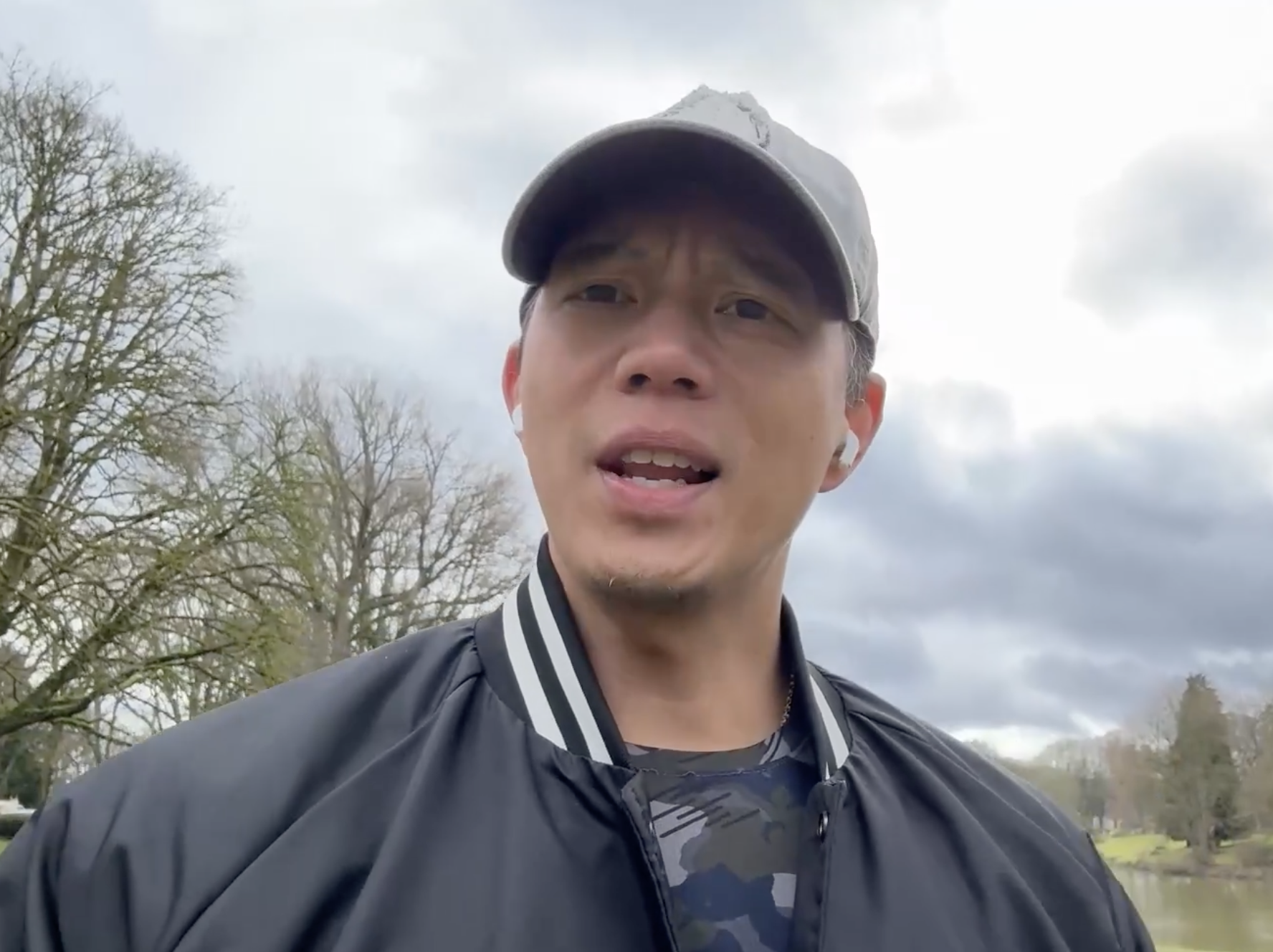
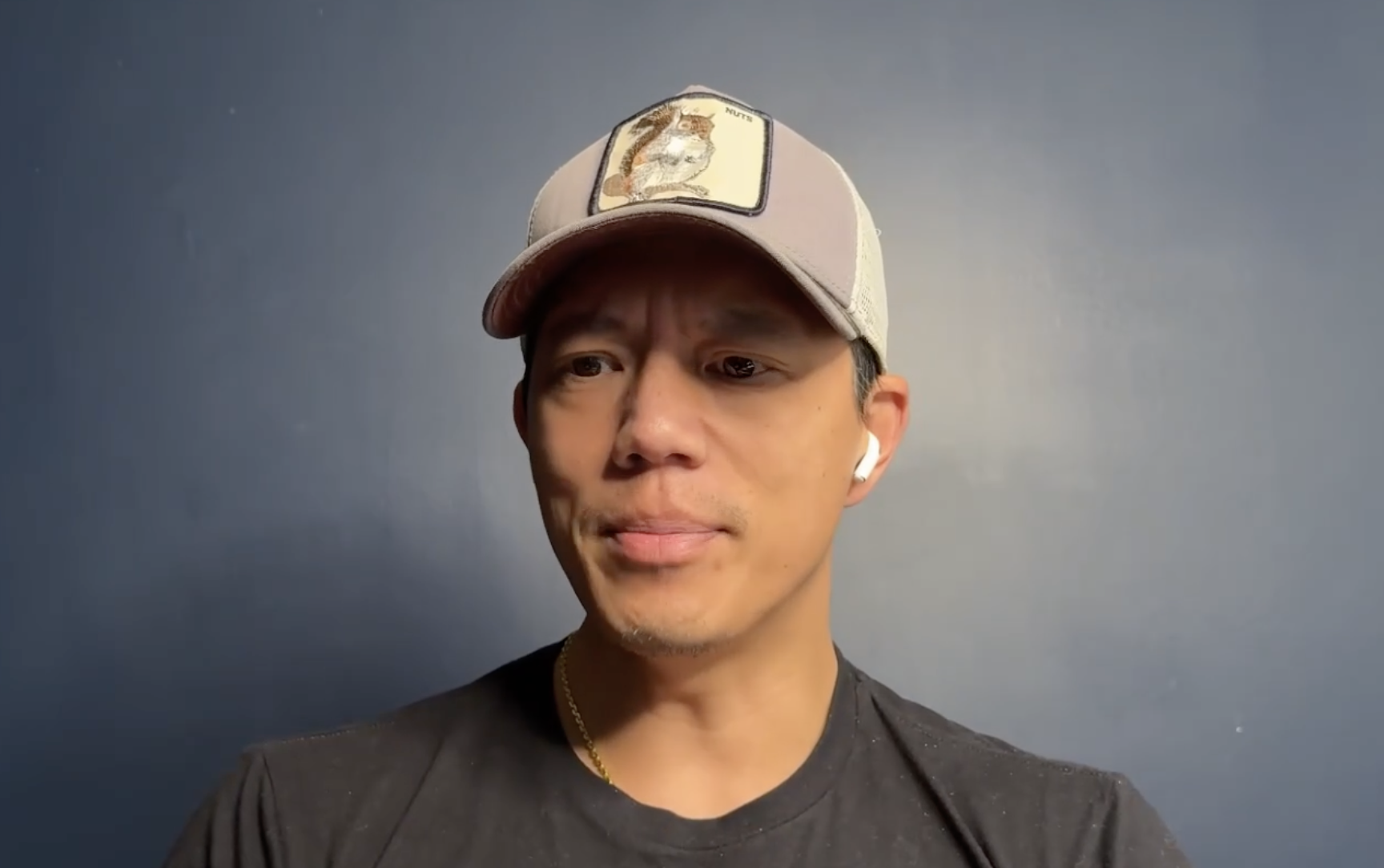
[00:00]
This episode is about the builders, the tinkers, the people that naturally want to explore things because they don't know how they work. not just of things, but of systems and people and processes. From an early age, Phil had this deep curiosity of how things work. whether it was taking apart a radio, building a house, or trying to figure out how things just naturally worked, Phil was one of those people. He's always been drawn to creating order from complexity. That instinct eventually led him to someplace unexpected. A law degree. Because at its best, laws are not just rules, but a framework for how people live and eventually thrive. Phil was a lawyer with the Department of Defense and the Army, helping shape policy, but I think more importantly, making sure that innovation stays within the boundaries of what's right and just. Today's episode is not just about building rules, it's about building innovation and legacy. And I'm really excited to share with you Phil's story. Let's get it.
and today I've got my good friend, Phil Reiman. Phil, good morning. How are you?
Good morning. How are you, Savan
man, I'm doing well. Lots to catch up on and lots to talk about today. And I'm really excited about talking about your background and where you are in life. Before we kick off with all that, you know, one of the things that always makes me laugh in hindsight now is people have asked me what lawyers do in the Department of Defense. And I always tell them that
Yeah.
the good lawyers keep you out of jail. And I feel like you did an exceptional job of that because I'm still not in jail. So thank you for that.
Thank you. Yeah, lawyers in the DOD. So I can talk for a while on lawyers, how they work, what they're supposed to do. It's an interesting job. It is not engineering. ⁓ Do not think that because one and one made two yesterday that one and one and two make, or one and one make two today. Their full-time, people's full-time job is out there telling you that one ain't one and that's why it ain't two.
Yeah. Yeah.
is an adversarial profession, you have to be willing to engage in tough conversations and argue points. At the same time, that kind of overshadows what we're really supposed to do. In the prosecutorial field, you were supposed to seek justice. ⁓ In the generalized representation of clients, your job is to represent your client's interests.
Mm-hmm.
But in the context of an ethical context of a profession and a society and as a human being in the DOD, we deal with the legal issues that come around killing people and breaking things. And it turns out a lot of that is fiscal, administrative, HR, ethics. The DOD does do weapons reviews.
Mm-hmm.
JAG Corps, Judge Advocate General Corps, the military branch in each one of the services that basically provides lawyers. Each one of the services has their own culture for JAGs and how they do things. excuse me. Hey, stop that. We could talk for a long time on that. can tell you though, right now is a very tough time for JAGS, the entire way that the legal in the DOD, legal services being provided and how that works in the system is changing. I'm gonna, we don't.
Yeah, that's incredible. That's incredible. I would love to dive into that for sure.
It's easy to run down the rabbit hole in politics and what is right because what is right is a is a legal issue You know, ⁓ we will talk about in terms of ethics and then they talk legal ethics and legal ethics are written down into a code which means that it can be assessed on a technical level But again, it comes down to what is right in your heart. What lets you sleep at night? What did you do the right thing? and those are very hard decisions when you're a military lawyer when you're making decisions about life and death or what's to target. I'm one of the few lawyers that went through the joint targeting class. And the big thing is, so I left government, right? Kind of with everybody else, but I took the fork in the road and I got out on the 1st of May in 2025, but at the same time, miraculously, that's also the time I left the army. After 25 years, I left the Army. So I lost not just one personality, but two personalities that same day. And ⁓ interesting bit, we were going to get passports because we have friends in Canada. We're like, let's go to Canada. We got time now. so I the post office getting that. And they asked for my ID, show my ID. My son says, what's that? said, well, that's my ARDC card, my attorney registration and disciplinary commission card from Illinois. It makes me a lawyer. And he's like, you're a lawyer? He's nine years old. You're lawyer? Yeah. I thought you were a civil judge. I'm like, all right.
⁓ man, that's hilarious. You know, it's, it's, it is funny how kids especially associate, who you are as an adult. Like I actually don't even know if my daughter knows what I do. frankly, I don't know what I do for a living half the time because it's constantly evolving, you know.
You're the principal toy maker to the king, man. The disc golf enthusiast.
Yeah, yeah, depends on the day, right? It depends on the day. ⁓
Yeah. Uh, I do a big part of what you're doing. And I think that's why I think this is super important between titles. I love that because it is how much, especially in a Judeo Christian, Western, uh, Protestant work ethic zeitgeist, right? Who are you? The first answer most people say as well. I'm this, right? And it's the, it's the high card to say, well, I'm a doctor or I'm, uh, you know,
Yep. Yep.
whatever and those kind of things that's a that's a huge impact ⁓ on people when they don't do that anymore right. ⁓ So yeah it's up there along ⁓ what death of a family member, changing jobs, losing jobs these are why those things are so important. ⁓ You lose a lot of your identity when those things change.
it definitely is. Yep, I agree. I agree my friend. Mm-hmm. Yeah, they're life-changing events. Having a kid, getting married, moving to a different house in a different area, those impact you tremendously and how you change. Phil, before we get into the deep stuff, the interesting stuff, I want to kick off our conversation with a few questions that have one word answers. You ready for this? All right.
You Okay, I'm ready. Is this gonna be like burgers or fries? Okay.
Yeah, exactly, exactly. One word that describes you right now.
motivated.
Right. One word for law.
art.
wow, why art?
because it's not engineering. Those are the two sides of the coin, if you will, or in the... obross circle of things, you go from art, which is completely subjective, emotional, there is no wrong answer to engineering, is the numbers add up. Then you come all the way around to law, which is kind of like, I wish it were more like engineering. We treat it like engineering. It is not. So yeah.
Mm-hmm. Interesting, interesting. One word for innovation.
Ooh, well, I have thoughts about it. The word would be... The word would be connections.
okay. Why expand on that?
so you can't mandate, you can't, that's my bigger thought is you can't mandate innovation. Hurry up and innovate. Doesn't happen, but I've seen it, especially in the DOD. And I see it in business too. You're like, hurry up and innovate. We have to be innovative. We're going to be innovative. You can't guarantee that that is. Unpossible. And, ⁓ what you find is that you innovate, when you're challenged with a situation.
Right. Right. Mm-hmm.
and you have a broad experience. So when people say, diversity is not your strength, hell yeah, you bring people from all over and it's one guy you didn't know who says, why don't we just put a stick in it or maybe put a window over the picture that you were constantly looking at. Exactly. That's innovation. Stealing from the best, right? That is innovation. ⁓ You want to innovate, you go see what other people are doing, you look on that other guy's paper,
Yep. Exactly. Yeah. I love it.
And you go, you know what, that's a brilliant idea. We could do that. ⁓ The best part about artificial intelligence, just the prediction engine vibe is that you can go, are the top three devices that make linear energy into rotary energy or something like this? And you're like, look at that. And you're like, yeah, that's cool. think we could use one of those. It's like the thing you knew of, but you can't remember those connections and that ancient.
Right.
I'm gonna say BBC TV show where it was the connection between things is that sort of thing. How does innovation work? It works because people have a broad experience and they use that experience to bump ideas together and sure enough, sometimes they fit.
Yeah, I love that. Last question, at least for one word answers. One word that scares you.
poverty scares me. Especially when you don't have a steady income and you're working from job to job or something like that, you're starting to think like, okay, what bridge would I live under? Right? ⁓ Those things are real and necessary. And part of the reason that what you're doing is important is because we...
Mm-hmm. Yeah. Mm-hmm. Yeah. Yeah.
We danger, we wrestle with problems like this. This is what keeps people up at night, right? Why do people get divorced? Why are there stressful marriages? Why do people commit suicide? Kind of hopelessness, right? Money is a big part of that. ⁓ You know, especially once you certain expectations and those aren't met anymore. It's gonna be hard, right? You wanna change careers and you're like, I have a friend.
[10:09]
Yeah. Yeah.
just left the DOD too, he's gonna go back and he's taking cooking classes because he wants to be a Yeah. And, you know, talk with his wife about it a bunch and, you know, they can make it work. I've seen other people make those same kind of changes. That's what they want to do, you know? And they never really work again, right? They're doing something they love. That's fine.
Mm-hmm. I've always wondered what that tipping point is for people because it's definitely a balance of things when you think about the things that scare you, especially during ⁓ uncertain times. You know, you're as an adult, you're always trying to balance how much passion do I have something? How much money is it going to bring in? What's the amount of time I need to invest in something like this? What are my trade-offs and costs like? or with my kids and my partner and whoever. And that scale constantly moves depending on where you are in life. I, you know, I always found it super fascinating. any one of those sliders can change depending on where you are. if you've made a shitload of money before, maybe you're not thinking about that as much now. Or if your kids are older, maybe you don't care about that as much as when they were five or six or seven. For you, the the thinking around getting a job to have a shitload of money afterwards, the first place I wouldn't go would be the DOD, right? Because it's not going to be a high high paying position where you're a managing partner somewhere. how did you knowing that that is a word that scares you? Like, how did you get to that point then?
I use your quote all the time. In government, we work at enormous scale, right? And under intense scrutiny ⁓ with very little tolerance for failure, which is the opposite of almost everything involved in business, small business specifically. And you mentioned it, like one of the things I really would love to have done and I still plan to do is have my own business.
Mm-hmm. Yep.
I realize the commitment in time, the commitment in everything, other than, and including money, right, will be a big deal. And it's one of the things I'm wrestling with now because I'm like, man, sure would love to do this. And part of that long to-do list and things that eat up my day are working out a business plan and kind of deciding if I should do this or that, especially as a lawyer, because you know, My big tool is my brain, right, my melon. And so I could set up my shingle. I already talked to the insurance people about this. It's a reasonable thing, but I'm not in the state in which I am licensed, so I wouldn't want to practice here doing that. I have to practice at the federal level. ⁓ And I investigated some other things. But generally, my point is there's...
Right.
the desire is there, it's does the resources that you have line up with that desire. And I think that's a lot of it. You need luck, right? And then you're on your way, but man, it's always a gamble, right?
Yeah, I agree. agree. But Phil, let's let's take it back a couple decades. I'm assuming your age here, but let's take it back a couple decades. ⁓ Where did you grow up and what were you like as a kid?
Yeah. Okay. I don't know, nerd I think. Depends on who you asked.
And nerd probably wasn't like a sexy thing like it is now, right? Like back in the day.
No, no, like, I think in seventh grade, I got glasses and braces like in the same week. ⁓ I had a lot of hair. I know I don't I should have some kind of evidence somewhere, but I don't I had ⁓ you've only known me I think as bald, right? Yeah, no up until. ⁓
Wow, and you probably had hair. Yeah, yeah.
law school I think I had basically long blonde hair. ⁓ Yeah they got the I still have I retained the eyebrows I got rights to the eyebrows but that's about it. And so yeah bookish kid I like reading but
wow, I couldn't imagine that.
I don't know. I liked art and that's how I got into architecture. I also liked engineering. I was just a, you know, a knowledge sponge. I remember somebody talking to my dad saying, you know, he was explaining airplanes and how they fly and stuff like that. And their question is like, well, what do you have to, how did you teach Phil all this? I mean, now he's just a sponge. And so that that's literally like The cool thing that's got me through most things is I just like learning things. So I went to college, decided to be an architect because I was in a history 101 class and the cool kids were sitting around me were like, I had no idea what I wanted to be. And the cool kids sitting around me were like, well, we're in the architecture school. I'm like, I didn't know that was a thing. There's so many other things that I didn't know were a thing. When I was in, when I was a junior,
Mm-hmm.
We took a tour of the industrial design studio. The guys who make everything, right? Products. I didn't even know that was a job. And when I got in there, their studio, their first project was to make their own sunglasses. And I was like, my God, this is the job. I love this, right? It's artsy and yet you still make stuff. I'm like, this is it. And as a kid, that was one of the things we did do. Me and my sister, we crafted things. We're always crafting things. We had access to power tools that other kids didn't have, like a lathe and scroll saw, drill press. We were out there crafting things. And I love the idea of making stuff. Built models as a kid, right? So I saw that and I was like, man, I really can't tell my parents I'm gonna do another three years of college because I... fell in love with this particular profession that I had no idea was out here. ⁓ So I got my degree in architecture, went to work, found out that even though I had a job right out of college, I found out that draftsmen basically had made no money. And we were competing right then and there against CAD nine, CAD eight, 10. And that was the big deal back then. Remember DOS CAD with all the...
Right?
In the prehistory, that's what we had. a friend of mine, I had already taken the LSAT once because I was looking for some other thing. And a friend of mine said, hey, come down, visit. I went down to the law school and I was like, this is the kind of thing I could sponge up. I really enjoy this. And applied and got into law school, did it. And in law school, I loved it. It was the college I kind of wanted. It was just books, reading, talking, big ideas. It involved, yeah, I got to do a lot of interesting things in law school, including I went to work at the criminal courts building in Cook County, 26th in California. ⁓ Worked there and then, and that was free.
Mm-hmm. Mm-hmm.
I was volunteer and then I found that the city of Chicago would pay you $9 an hour if you were willing to come do their traffic court for them. So I went and did traffic court until I graduated and then got a job in the great city of Peoria, Illinois and worked there for a couple of years. Then I got a job at the McHenry County State's attorney's office, worked up in Woodstock, worked there. Up until about 2007 when, you know, my fate was tied to a political official and my guy lost, so I had to get another job. And the Army was hiring civilians, so I took a job as a civilian. Before that, so I joined the Army on September 10th, 2001. Right.
Wow. Wow.
And the very next day, my roommate at West Point grads like, you need to get in here. We're at war. I'm like with who? And he's like, I don't know, but somebody. Spent that summer, fall and early spring doing things to help the nation go to war. And then I got mobilized for the great battle of Wisconsin, where we tried to push the fourth infantry division through Turkey. That didn't work out. I did military justice up there. Then I said, I'm going home. And about 10 months later, I got another job with the 451st Military Police Brigade, sorry, 451st Military Police Liaison Brigade Battalion. we were an 11-man unit that went and ran the theater internment facility at Camp Cropper. I don't know if you remember the House of Cards that you wanted. Yeah, so those prisoners were who we held. Yeah, we had enormous national visibility. Met, you know, McChrystal. Rumsfeld came to visit. Condoleezza Rice came to visit. You know, lot of stuff like that.
Mm-hmm. wow, that's incredible. Right.
Very high profile, very insane. We ran three companies of different things for a while. I did that for about 18, 19 months and then came home again. And that's when the election happened. But, know, oh, I went to Abu Ghraib halfway through it, not halfway through, but some portion through that tour, I ended up being sent to Kurdistan to work at Fort Seuss. So I got to work with a Peshmerga. And we had a couple of like, we some really interesting experiences up there. And this isn't a war story podcast, but some fun things happened up there. A lot of good things in those 20 months or whatever. Came home, the election happened. My guy lost, needed a job. I taken the army contracting course. So I took a job as an army civilian, ended up in Kuwait. And in Kuwait, they said, can you run a training class to go to Afghanistan? And so I did training in Afghanistan with some great people, different cops, right? Instead of FOBs, they were cops. And I went to Iraq and trained up there, did a lot of stuff. And then people that I had deployed with in Iraq the first time said there are jobs back in America, clearly you want to come here. And so I got a job as a commercial litigant. I was basically a trial lawyer for the Air Force. over at Andrews Air Force Base here and that's why we're here in Alexandria. And after doing that for roughly nine years, a friend of mine who I'd also been with in the Army said, I need someone to fill my shoes at the mighty Defense Digital Service. I interviewed a bunch and they took a chance on me and so that's how you know me.
[21:34]
incredible. What a a whirlwind of, of events. Phil, I want to maybe take a couple beats back and ⁓ try to try to dig into a little bit more. Some of the the drivers behind some of these decisions you've made. So you know, as a kid, it sounded like you were very interested in crafting and building things and breaking things apart and seeing sort of how things were put together. ⁓
You Mm-hmm. yeah.
And then you became you you you had your degree in architecture, then you got into law. Like what what do you think was the common thread across all all of those things? Because at its surface, they seem very disconnected, right? But in your head, something must have sort of connected them all. Like, what was that?
I would say the reason I became a lawyer was I wanted the opportunities that lawyer, I see lawyers getting. Lawyers kind of run America, right? Lawyers are everywhere. ⁓ Once you do it, there's a lot of opportunities. And just like with engineering, if I'd been better at math, I might've done it, right? It took me forever to rock calculus.
Mm-hmm. Mm-hmm. Yeah.
And so that was it. think it's the opportunities that came with whatever decision. If I thought there was going to be more blue water, open sea sailing, I went that direction.
see. I see. What how did you frame opportunity? In your mind? Like, what did that look like? Was it just the market size? Or was it the availability of jobs? The shifting, you know, macro or micro ⁓ economic trends? Like, what did that look like to you?
I wouldn't say it was a specific thing. Each opportunity comes with its own calculus. ⁓ So the DDS one, I was both tired of my job. I didn't see a future in it. And I think that was the same thing when I was a felony prosecutor. My guy had lost. There's no future here.
Mm-hmm. Mm-hmm.
Nothing more will happen. There'll be nothing more amazing. And so that's pretty much it. If I don't see any future in the task mission, it's time to leave. And if there's something else to do, let's go do it. You you make your own opportunities. It's always a thing, right? So whatever the new thing is, you go after it, right? Have a good time. Enjoy it. Make it as awesome. Another, so to reference an earlier podcast, Howie Cohen, right? Great guy. I also, I knew I loved Howie Cohen when he held up Lawrence Friedman's strategy book because that is my book. I love that book. I don't know if you've read it and I'm not getting any plug money out of this, but yeah, Professor Friedman's, I thought it was going to be a military strategy book and I've always been fascinated by.
Mm-hmm. Yeah. Yeah. Yeah. There's no affiliate link.
how these decisions are made. And it is essentially not, it is a quest for understanding strategy because we use the term so sloppily and the first maybe third is in the military context, but most of it is in business or in just social context. And that's what makes it a great book for everyone rather than like specifically soldiers. It is about that time when you don't have power and you want to reestablish power. You're a prisoner, you're poor, you're disadvantaged in some way. How do you come up with an idea to address that? And I think that's what makes it relevant to your work you're doing here. Just great. I was like, ⁓ man, look at that. He even threw out a book. That's my guy.
We didn't set that up intentionally, I promise.
Yeah, I know.
Take me into the world of your profession, at least maybe like over the last 20 years or so, because I think people have general knowledge of what lawyers do in the civilian world, right? Like you get into a car accident, or you're getting divorced or whatever. There's usually like a good frame of reference for people. But in the army, and in the DOD, How is being a lawyer different there? Like what is some of the common traits across being a lawyer in the federal government that you've seen?
We are a rules-based society and even more rules-based inside the DOD. I'm just gonna use the Army as an example because it's easier than most of them all, but in the services there is a regulation for everything, right? And beyond that, of course, there's culture, but the social contract is that we will follow the rules and the unwritten rules and the written rules will be those things that are usually
Mm-hmm. Right. Yep.
proscribed, you can't do them. And then there's those things, everything else is prescribed, you can do it. The lawyer's role depends on what the unit is, the unit is trying to do. Let's say, so there are six core competencies, depending on who you ask, but like the government buys things, right? They have to buy things according to rules. The government hires people and fires people according to rules. Because Rules are composed of, in this case, English words, which are shorthand for bigger ideas. The facts that come from actually living are always fuzzier. And once you start living in a world of rules and you're, as I said, risk intolerant, you tend to like go, hey, is this okay? Is that okay? And so you get a lot of that sort of question. We want to fire this guy. We want to buy this using this money. want to court martial this person. Is it okay if we use this weapon in this fashion? Can we promote these people for doing this? Can we get this award? What are the other things we typically sort of do? You name it. Can we gather this information from these people? ⁓ So all of those things were
Great. Great.
generally require a umpire, a guide to help people get through the rules. And then they'll go on and employ them as they see fit. In the DOD context, that's a lot of what you're asked to do. A lot of what you can do in your job is you can do most of it via email, right? Somebody writes in.
Yep. Yeah. Yeah. Yep.
Can I seize the following islands using the following rules and these forces? And you say, well, I understand you're asking whether you can. It's very much like asking a chat bot. I understand you're asking. That's an excellent idea. Here's the rules that apply. Here's what you need to think about. And here's what people might say. And it's the same sort of thing that you encounter as a litigator.
Right?
As a trial lawyer, a bad thing happens. I say someone's at fault. I put a case together and sue them because I think it's someone else's fault and I should be made whole. They respond and say that's not exactly the facts. That's the discovery period. And then we argue, after we've got agreed facts, then we get close to it. Then we have a discussion in front of a judge about what we think we should do. That's why most cases settle.
Mm-hmm.
can't figure out the facts, we'll go to the judge or the jury for facts, and then ask them for resolution. It makes it more of an art. There's so much to it. it is, lawyers are almost self-propagating. Lawyers tend to generate needs for more lawyers. And if it weren't like that, there's a lot of like,
Yeah, yeah, there's there's a ton in the DOD, believe me.
lawyer free movements out there, right? And as soon as you see that, and they're like, you don't need a lawyer. Just, you know, use the form, fill it in. First of all, you might not have understandings of all the repercussions of all the little words we used in there and how those clauses work, right? ⁓ How those are interpreted in a larger context. And then you get into, well, gee whiz, that's not what I meant, what I signed it or created it, right? Everybody loves, in law school especially, they love those little contracts where it's like Abel gives Baker,
yeah. yeah.
A loaf of bread in exchange for a promise that he will pay him tomorrow. Did they form a contract? What are the rights in that contract? Can bakers sell that right to someone else? These are interesting contract formation questions that probably interest only lawyers, but they should interest everyone. They are the rules by which we live, right? And when Baker doesn't pay,
Mm-hmm. Mm-hmm.
Like, well, now I'm out of a loaf of bread and the cost of making it and the opportunity to sell it to someone else. There's all kinds of crazy, crazy ⁓ arguments there, but it is fun to think about and make those arguments and talk about what is right and wrong. What is justice? These things all are tied together.
[31:00]
Yeah. Yeah, it is pretty incredible to think about the impact of a good lawyer in an organization and how, and how much more efficient the organization could be. Bill, in your opinion, what do you think makes for a good lawyer? Like, what are some characteristics that that you look for?
⁓ honestly, I call it ⁓ a client empathy because, you need to understand what that person who came to you is worried about. in the DOD, honestly, when you're the level of a commander that has access to a lawyer and it's usually higher than you'd think, you're worried about your career.
Mm, okay.
So it's going to get me in trouble if I do the following thing, right? They're not looking for giant strategic advice, but sometimes it happens because you've had experience or have research and you can say, you know what? I know you want to skin the cat this way, but here's a couple other cool ways you can skin it and offers less risk to you. They love that as a lawyer. But it's also the way it is in real life. When something comes to you,
Yeah. Yeah. Yeah.
Lawyers and doctors share the fact that people come to them when they're in trouble, right? And unlike doctors, rarely do people come away going, yay, I went to the lawyer, I feel better. Now they just come away with a different set of worries, right? And a bill. And it is a tough thing. I understand that.
right, yep. All right. Yep. Yep, yeah, and a bill usually.
But I have had a lot of friends in my career come to me and say, is the problem, right? Or you're a lawyer, you can, what do you think about this? And one of the things I would do all the time in the army was people would come to me and go, hey, I need a lawyer for this or that. And I would get them one. And I have a whole basically kind of personal SOP on getting people lawyers. But they'll come in and it's that client interview, talking to them, what are they really worried about, what's the bigger problem, where does this fit in the spectrum of things that we can do. and I have everything from people who come to me about wrongful death and malpractice to federal grand juries to DUIs. Those are very serious things that they come to you for. You have to understand that they're stressed and you need to remain calm.
Right. Yeah, the minute you start freaking out, that just sets off a slew of Dominos ⁓ Like if the lawyer is scared, I'm definitely going to be scared. And I don't know why I'm scared, but he looks scared.
Yeah. Yeah. Yeah, I tell people all the time when I'm recommending lawyers, like talk to a couple of them. Even though you like the first one, talk to a couple of them because you might, you have to be comfortable. Especially, there's people who come to me for like divorce, right? I hope you get a lawyer, but I'm like talk to more than one because that is generally painful if it doesn't go great. ⁓
Yep, I agree.
I would say gee whiz, you know, gotta be comfortable with that person and knowing what, being very clear about what you think is important in that dispute.
Growing up, did you take away any skill sets or build any character traits from your time learning to be an architect to your time being a lawyer? Are there any transferable skills there?
from an architect, handwriting, we spent time lettering. And so I still kind of write in all caps. I think about fonts more than a lawyer should. But it makes a difference to me. And yeah, have friends, I will have long discussions over, you know, Ariel versus Helvetica and
Wow. Right. Mm-hmm.
But actually, got like the key skills. I would say from my mother, I got make a list. Do it, stick to it. Agendas, get a list, do it. It's literally made a huge difference. It forces you through those things you don't want to do that you will put off. And from my father, I got the let's try it, right? Have a good attitude, let's try it. Yeah, you never know.
Yeah, you never know. You never know what you're gonna get. Phil, you spent time overseas in different countries, different states. What did you take away from that? And how do you think that has helped you or hurt you with where you are right now in life?
It's definitely helped. Exposure to other cultures is essential. I've been to Germany, I've been to France, Kuwait, Egypt, Iraq, Afghanistan. All of those things have enriched my understanding of what other people are about. I'm not a huge fan of traveling, but... Being there is amazing. ⁓
Right, yeah, you're just waiting for the teleport machine to be invented.
Right, exactly. you know, I think I built that sort of hunger to see other things and other people. It gives you perspective. I cannot recommend it enough. anywhere, even just, you know, the old saw goes out, this is 100 % true, but that for most of human history, people grew up and lived within like a mile of where they were born, right? I don't know if that's true. We were hunter gatherers for long time. People walked all the hell across Asia, but, uh, I, you gotta get out and meet other people, you know? Um,
Right. Right.
It helps you build empathy. helps you build trust. It helps you understand some of the universal things that we share. And the more experience you have with people is that thing that gives you an ability to connect with other people. I think it's important that, you know, the kids get outside and mess with the kids in the neighborhood, right? That's it happens.
Mm-hmm. Yeah.
There's kids who don't do that, but I also love that they learn differently, have different speech patterns because they're exposed to YouTube, other social media, different plans. If you don't want to go down a rabbit hole for like the rest of the afternoon, there's a guy, Language Jones, Dr. Taylor Jones, yeah, Taylor Jones. Amazing work. But he did a deep dive on skivity. He did one on six seven. And, but he is hilarious in the best way an academic can be. Yeah, I really enjoy his work. There's a lot of people I watch on YouTube. I hardly ever watch TV anymore, right? And the
Yeah, I don't either. I don't either. you know, it's funny, I was listening to a podcast, I think it was with Barack, and they were talking about the idea of social media. Well, first, they were talking about the importance of being sort of more worldly, right? Like going out. seeing things, hearing people with differences of opinions. That way you can really sort of like understand your own convictions, your position on things, and it keeps the conversation going. with social media now, you can get down this rabbit hole of reinforcing these ideas to a point where you become very narrow minded. And one of the things I absolutely love about traveling is it It forces you to naturally be in these environments where you may or may not, you know, completely agree with everything. Let's just say I go and live in Alabama for a while, right? Like very different than Seattle, Washington, very different than DC, or I moved to Mexico City. It just sort of forces you to do that and have those types of conversations. you, when you were overseas, how did you put yourself in a position where you could be successful in your roles over there? Were there things that you just said, hey, Phil, I'm gonna wanna try to do these things, like eat different types of foods, maybe learn the language a little bit better, go out to a nightclub, what did that look like?
⁓ All those things. was ⁓ in the Jim Carrey sense, the guy who says, yes, I'm, I'm a joiner. I joined the army for God sakes. That's clearly, that's a problem. And so if, know, let's go out, let's go do things. It's a look at stuff, but you hit the nail on the head. Language and culture is, is essentially driven by the young, right. And specifically like 13 year old girls, ⁓ but
Yeah, right. Yeah. Yeah, I don't know their lingo. Like, I feel lost half the time.
It's insane. because social media is algorithm driven, it tends to pocket you with other things that it thinks, things that it statistically scores as that you would like, which means you're in a pocket of your own ideation. And that's never good. Right. You don't get back to the mean. You're not headed towards the bell curve. You're headed at the 2%. your view is invalid from there, right? Most of those views are not valid. You have to bring it back into the, again, context of everyone. so putting your phone down and going out talking to people is crucial skill.
Yeah. I just think that even sort of the long form of conversation in the real world is something that we don't do enough of without the interruption of looking at your phone every 10 minutes, five minutes, whatever, like sit down, isolated conversations where you're, you're going deep into, you know, maybe a handful of, of, of different topics and, uh, I think that skill is becoming this lost art that we just don't know how to do anymore.
[41:06]
100%. Rational conversation is what you're doing, right? I'm not going call it mediating, but directing a conversation to have a discourse is hard and it is a learned art and it's not always successful. Simon Sinek, you know him, motivational speaker, right? So he did, it just did a small thing. was like, Hey, how do you feel about me when I have my phone in my hand? And then he put it down, right? And out of respect to you, my phone is off, right?
Yeah. Yeah.
Because I think it's important especially when you're gonna be you know talking to someone You need to turn your phone off ⁓ And I think that's a big skill how many skills have I mentioned so far talking to people meeting conversations. This is another one but
Yeah. Yeah. That's lot. These are just basic skills, though, as when we were growing up, that that you had to have. But, you know, I think nowadays there's all these other skills and this this will sort of be a good segue into then my next series of questions. But there's these other skills that employers are looking for now that you, you know, may not have been there five years ago, 10 years ago. And I'm wondering sort of like how that impacts, you know, your view of the types of jobs or the types of opportunities that you're looking for. And, how does that sort of impact how you're approaching some of these opportunities and conversations?
I would say... that I want to work with a good team. I think everybody does. But we'll take, in a good team, right, you'll take on any task. What do want us to do? Build a canal? We can do it with a good team, right? Do you want us to make an app? We can do that with a good team. It's the, you have to like the people you work with rather than get in there and grind. And so that comes through in the, the job search,
Mm-hmm. Yeah, right.
and the way I present myself to prospective employers in that I want to be liked and I want to like you and I want to know that you like me and we like the mission. So we are a team, we're doing something we think is important, we're willing to work together. People often say, why don't you go into private practice? know, there's firms. Like I've never met a firm that I thought was a bunch of great people. probably out there, but I haven't met every firm, because the way law firms work is you're a billable engine and you gotta get that done. So you're probably not gonna ever have a conversation in the break room. That's billable time, right? The only time we're talking is when we're talking about a case where I'm going to talk to depose someone. Yeah, that is a grind.
⁓ Mm-hmm.
Some people really enjoy it. They love that digging into the case thing. That's not my favorite bit. My favorite bit was misdemeanor court, working for the man, handling these sort of petty crimes. Very interesting between police, witnesses, neighbors, defendants, discussions, settlements. It's all people. It's all, you know, squishy. And my heart doesn't get broken when things break down because I know what I did and I tried or But like I I know people who put their whole lives into briefs and are submitted to the court I'm like, it's just not gonna go your way. You may have a brilliant argument But the equities are too strong on the other side. It's just not gonna happen, you know, but they were wrong That's not how the law works. It is not engineering he said as a theme. I should get that on a t-shirt.
man, I mean, there's just so much to dig into there. But I think the thing that really excites me about what you just talked about is this idea of people and teams and culture that has I don't know, I don't want to say dictated, but you know, enticed you to go to these different organizations. We worked at Defense Digital Service for many years together. For people that don't know, it was tagged the SWAT team of nerds. We were a, anywhere between 20 to 100 some odd people organization that was a rapid response team for the shit that was really bad, that was broken, that needs to be fixed. The the culture I would say at DDS, in my opinion, would be very counter to what you would think a Pentagon organization would look like. What about DDS drew you in initially, Phil? Are were there certain things, attitudes, dispositions to processes that got you excited?
100 % One of the stories I like to tell is when my very first day I showed up in a suit, right? Knocked on the door and it was the larger room. We call it Endor. ⁓ And there's couches and stuff and there's Owen. He's got a DJI drone cracked open and he's soldering. And I'm like, I want to work here. What's it going to take? And ⁓
Yep. Yep. Right.
I think that enthusiasm for doing something, I learned all the other stuff, right? I didn't know about software development, DevSecOps, I didn't know all this other stuff. I just knew I wanted to help these people because they were my people. ⁓ And yeah, it was life-changing, it was amazing. It was contrary to everything I'd known about the DoD. And I think it was intended to be that way.
Yeah. Yeah. Yeah, yeah, it definitely was. And you know, it's, it's, it's really a testament, people talk about how the DOD, I guess, DOW now the DOD is this organization that is unable to make changes, or do things differently, or work faster, or whatever, you know, negative connotation it has. But I think if you've got the right people with the right
The. ⁓
propensity to push and understand the leverages that you need to pull, you can make it happen. There are things that can happen within an organization as big as a DoD. ⁓
I had, I really like, so I've always been a fan of organizational psychology and ⁓ one of, it takes very little to squish innovation, especially in DOD where we're trying to regulate and regularize everything, right? Leaders in, a chaotic situation do not want part of that chaos to be the way this guy looks or the way this guy acts. Those things are regular. They would much rather push stiff toy soldiers around and on things to make help make their decisions a little easier, right? Especially at the huge scale. I want to be able to move a division, a meth view to a particular spot.
Yep.
I don't want it to be some kind of a regular thing and I have to sell it, right? I just want them to go and do what I'm asked them to do and have certain expectations about what they can and can't do. That has always been a military mindset. You have to go fairly far back to get into leadership when it was just kind of the cult of personality. One guy and his group of retainers kind of hang out together.
Mm-hmm.
And that's his group. knows his group. His group is probably not more than 120 people. And so when you have teams and effective teams, they don't have top top level support. All that innovation is going to get sanded down. All that unique capability, that ability to personally stretch and make things happen, gets sanded down. The best missions I've ever
Yeah, for sure.
had, were those where it's, Phil, you're in charge, go do it, tell me when it's over with. Because if nobody's managing you, you can take chances and do great things and come back go, wow, you did amazing. The risk, that's another thing we talk a lot about leadership. Short story here, another thing I should get on a t-shirt is just leadership. I've taken a lot of leadership classes. I can sum them all up. It's influence. That we live in the age of influencer. is, ⁓ yeah, you know, are the Paul brothers leaders? Well, yeah, they influence people. That's how leadership works. There is no substitute for it. We don't always quantify it. It's not always, you know, the elements of defense, know, defense, industrial, dime elements. It's not all the things we classically think of as leadership. Like when we talk about leadership, especially at the larger scale in national instruments of power, like you're not
Right, yeah, for sure.
counting Hollywood, you never count Hollywood. You know how much leadership influence that gives you? It's enormous. We should be subsidizing films. ⁓
Yeah, I, I talk, ⁓ when I was CXO, I talked a lot about the power of controlling your narrative and being able to communicate clearly and the amount of influence that you can have, especially with initiatives that could be contentious or that are ambiguous or that have been failing for a long time. one, if not the most important thing is that ability to communicate and control the narrative.
So that brings us all the way back, to what lawyers do in the army, in the DoD One of the most important things in the American military and the way that the West fights wars is to maintain the moral high ground. We have catastrophic weapons that do horrible things between gas and lasers and atom bombs, right? We can do horrible things to people. So we need to maintain that moral high ground.
Mm-hmm. Mm-hmm.
And when you see the lawyer's role pushed aside, that's worrisome because one of the key things we do is remind people about the law of war and why it works, why we don't torture prisoners, why we use our weapons the way we're supposed to. And when you see things like, yeah, I don't know. We're not gonna talk about things we didn't see.
[51:08]
Right, right, right.
who clearly some people were not getting the message because that leadership, that influence in that area allows the American army to go do things that other armies can't. And if you go out and do things that are contrary to that narrative, right, and you don't support that narrative, you then lose that high ground and then you're just looked at like any other guy with guns.
Exactly. wrap up our conversation here the same way that we started it. And maybe just take the summation of our entire conversation and try to distill it into one word.
Okay.
As you look forward, if you were to describe your approach to life looking forward in one word, what would that be?
out looking forward. you I would probably use the word horizon because there's a lot, a lot we can go out there and do. And I'm not gonna limit my compass vector to something specific, right? I am looking for that next opportunity. I am looking for something that takes me to the horizon and beyond. I wanna do something big. So that's it. I was gonna use the word unpack because it seems to be the theme.
Ooh. I like Horizon, I think that's very fitting. think that's very fitting.
I think that works with the Between the Titles too, because I think you're leaving one perspective, coming across a horizon, entering a new landscape, right? Don't freak out.
Mm-hmm. Yeah, yeah, different world. Yeah, I agree. agree. What's one value you refuse to compromise on no matter the mission or the job?
Well, this goes back to my thoughts on leadership. think honesty, which is essentially a form of integrity, is the one you have to do. Especially like, it's the little white lies, failing to tell people what the problem is, is really the thing that, you know, sinks the submarine or whatever it is. You need to get out there and...
Mm-hmm.
you know, bad news doesn't get better with age, handle it directly, do it the right way, use your agenda, address the problems, get after them. All that builds reputation and influence, which makes you a leader. And it can be spent in a heartbeat. So you have to keep that going.
Amazing, All right, Phil, I think that is about it for the show today. You your career shows that progress and principles don't have to be at odds, right? Like there's just a lot that you've done over your career. I wish you the best in the future and I appreciate you coming on.
No. You bet, thank you. I can't wait to see who's next.
Me neither. Alright, I'll talk to you later. Alright, see ya.
Alright. Bye, bud.