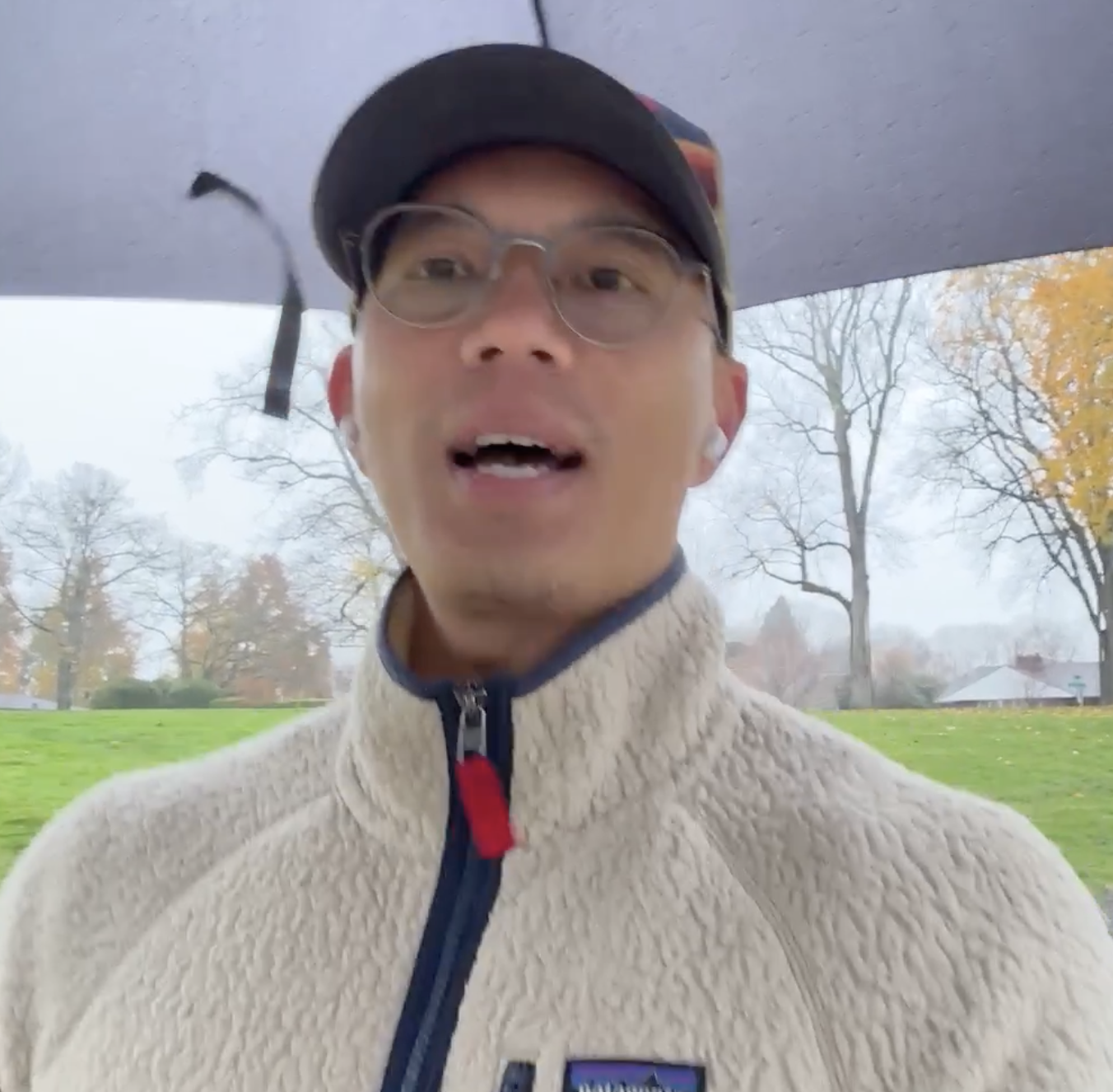
Welcome to Life Between Titles. I'm your host, Savan. Happy Thanksgiving, everybody. I thought it would be nice to take a moment to do some reflections and talk about the things that I'm grateful for, especially as we're getting to the first two months of our podcast being recorded. As you can see, it is a very rainy day here in the Pacific Northwest, but it is still absolutely lovely. And thought I would take some time out to give everybody an update on what's happening so far and express my gratitude. When I first started this project, I hoped the conversations would be meaningful. What I didn't expect was how deeply they would cut, how universal their themes would be, and how they would transform me and my search and my understanding of who I am. So today I want to share with everybody what I'm grateful for, told through the lessons each guest has given me. I want to start with Howie. He reminded us that leadership begins with service, that empathy is a strategy, that relationships are the currency that's more important than the job title itself. He reframed unemployment as self-ownership and gave us permission to see reinvention as power rather than loss. From Sarah, I learned what it looks like to change your entire life on purpose. She walked away from one career to pursue another, battled imposter syndrome, and still found a way to keep moving forward. Her story's proof that purpose evolves with us. From Marie, I learned about trust. Trusting yourself, trusting uncertainty. Trusting that your intuition knows where you belong long before logic gives you that permission. Her story about migration, reinvention, and spiritual homecoming taught me what it means to live a plan without a plan. From Anne, we heard about identity. heritage, anger, grief, and the painful unraveling with what happens when systems you serve begin to fall apart. She taught me that rebuilding is not a step backwards. It is a return to the fabric of who you are. From Katie, I learned that creativity can last a lifetime. her father's story and her own, she showed me that vulnerability is not a weakness. It is a force. It is how we stay human while navigating these challenges. Vanny I learned about the in-between generation, the children of Cambodian refugees, the guilt, the promise, the responsibility to not just survive, but to thrive. Her story's a reminder that we all carry our parents' sacrifices forward, not as a burden, but as a purpose. And from Michael, explored fatherhood, heartbreak, and the quiet courage required to show up for your kids, even as your own life is unraveling. His story reminded me that fatherhood is not a title, it's a daily act. From Pamela, I learned about rediscovering yourself in midlife. The weight of caregiving the exhaustion of being a single parent, and the spark that comes from returning to art and to community. She reminded me that it's never too late to choose joy. From Cheryl, I learned the craft of listening. Clarity, acknowledging, validating. Tools that make people feel seen without centering ourselves in their story. Her work taught us that communication is a practice, not a reflex, and that authenticity can't flourish where we shrink ourselves to fit it. From Wes I learned that transition after service is an entirely new battlefield. We talked about discipline, leadership, and the quiet work of redefining life after 20 years in the Army. His reminder to keep moving forward and to stay curious and to let life remain to be continued carries enormous weight for me. And then there's Jason, whose episode is coming soon, I promise you, but whose impact is already clear. Jason taught me about preparation, negotiation, and navigating appointment with strategy rather than fear. He reminded me that confidence is not arrogance. It is clarity. From him, I learned how important it is to advocate for your value, to gather information, and to ask the right questions, and to approach every transition as a dialogue rather than defeat. His voice adds something essential to the show, ⁓ practicality of the things that are missing between your emotions and logic. if I take a step back and look at everything put together, there's one shared truth. And it's that everybody has stood at this doorway of change. Some of us were pushed there. Some of us willingly took that step and some of us really just sprinted there. But Each one of us are at the heart of this podcast. Transformation is uncomfortable. Re-invention is very messy. Uncertainty is real, But meaning lives inside that discomfort. Gratitude doesn't erase the hardship. Gratitude gives hardship shape. It turns chaos into clarity. It turns loss into direction. and it turns uncertainty into possibility. So this Thanksgiving, I'm grateful for every person who trusted me with their story. I'm grateful for every listener who showed up each week searching for something to help them move forward. And I'm grateful for the truth that has emerged from each episode. We grow by letting ourselves go. We grow by trusting ourselves. We grow by walking through these doorways of uncertainty where we can't see the end. And for that, I'm appreciative. Happy Thanksgiving, everybody. This is Savan Let's get it.
“
Walking into uncertainty is sometimes the most honest thing you can do.
Savan Kong
Two months in. Savan looks back at the guests who shaped the first stretch of Life Between Titles and shares what he didn't expect to find in the conversations. Not a recap. A reflection on what uncertainty actually offers when you stop trying to outrun it.
In This Episode
- What the first two months of LBT revealed about career and identity
- Why walking into uncertainty is sometimes the most honest thing you can do
- What the guests taught the host about his own in-between
- How the show has changed since the first episode
- What comes next for Life Between Titles
What We Discuss
Looking back at the first two months of conversations
What each guest taught Savan about his own transition
The unexpected gifts that surface when you stop running from uncertainty
What the show is becoming and why it matters
What walking into the unknown actually offers you
#lifebetweentitles#careertransition#identity#lifetransition
Full TranscriptLightly edited for readability · click to expand
Savan Kong
More Conversations
Keep Listening
Every episode is a different story about the space between one chapter and the next.